Beef navel or plate makes superb pastrami because it has the rich fat seams and deep beef flavour needed for that classic deli-style texture. The cure seasons the meat right through, while the peppery coriander crust, smoke, and gentle steaming finish give you slices that are tender, juicy, and properly savoury.
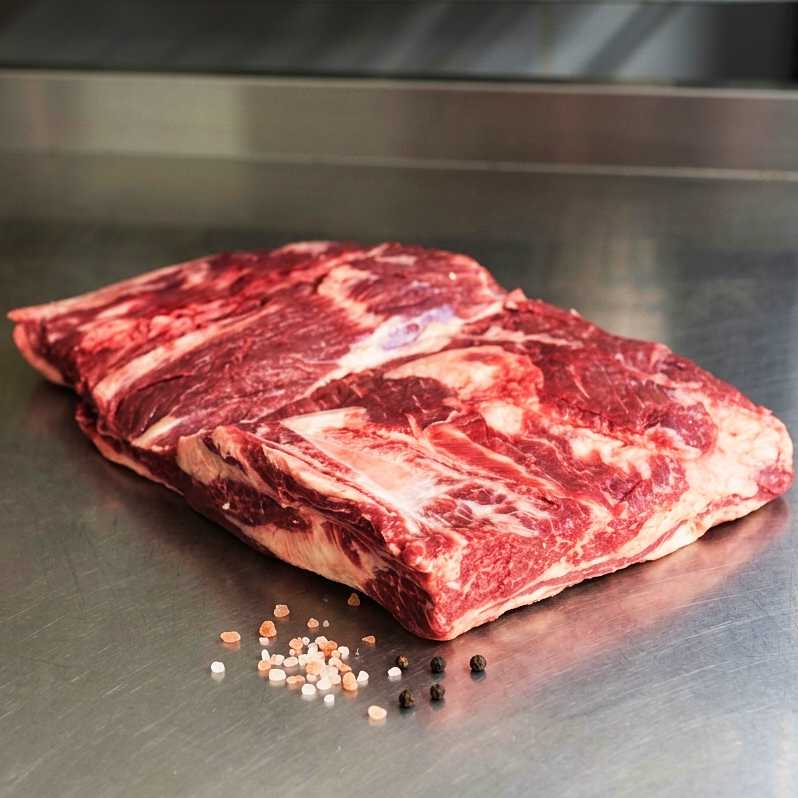
A whole Native Breed Beef Navel / Plate Cut is a rich, well-marbled beef belly cut made for low-and-slow cooking, smoking, curing or braising.
Taken from the underside of the animal, it has layers of meat, fat and connective tissue that reward patient cooking. Supplied as a whole 3.5–4.5kg cut, averaging approximately 4kg, with enough for around 10–14 generous portions. A serious cut for barbecue, pastrami, burnt ends or generous slow-cooked beef dishes.
£67.00
Buttered rye bread with sharp mustard is the classic choice, especially with a few crisp pickles on the side to cut through the richness.
Warm potato salad with mustard, dill, red onion, and a little vinegar works beautifully, giving you something hearty but bright enough to balance the fat.
Braised red cabbage with apple and caraway brings sweetness, acidity, and gentle spice that sit naturally alongside the cured beef.
Crisp slaw with white cabbage, fennel, gherkins, and a light mustard dressing keeps the plate fresh and gives welcome crunch.
Salt-and-vinegar roasted potatoes are excellent if serving the pastrami as a main, especially with a spoonful of sour cream or horseradish cream.
Use beef navel if you can get it, as it is the traditional pastrami cut and has the right balance of fat, grain, and chew. Beef plate is a very good alternative, particularly if it has enough marbling.
Measure Prague Powder No. 1 accurately and do not substitute it with ordinary salt. It is used for curing safety, colour, and flavour, and the quantity matters.
Do not skip the soak after curing. It prevents the finished pastrami from becoming aggressively salty.
The pastrami is ready when it probes tender, not simply when it reaches temperature. The 93–95°C range is a guide, but tenderness is the final test.
For the cleanest slices, chill the cooked pastrami overnight, slice thinly across the grain, then reheat gently with steam.
A juicy Zinfandel works well with the peppery crust, smoke, and rich beef, especially if the pastrami is served warm. A lighter Syrah or cool-climate Shiraz also suits the spice without overwhelming the cured flavour. For something more restrained, try a fresh Cabernet Franc with gentle tannin and savoury red fruit.
A dry Riesling is excellent, particularly with mustard, pickles, and rye bread, because its acidity lifts the richness. Grüner Veltliner also works nicely, bringing peppery freshness and citrus bite. A lightly oaked Chardonnay can pair well if the pastrami is served with potatoes or melted cheese.
A crisp pilsner is one of the best matches, cutting through the fat while keeping the spices sharp and clean. Amber ale gives a maltier, rounder pairing that suits smoked pastrami sandwiches. A dry cider is also very good, especially with apple-braised cabbage or mustardy potato salad.
A sharp ginger beer works beautifully with the pepper, smoke, and cured beef. Sparkling apple juice with a splash of lemon gives a clean, bright contrast. A cold-brewed black tea with lemon is also a strong match, especially if the pastrami is served in rye bread with pickles.