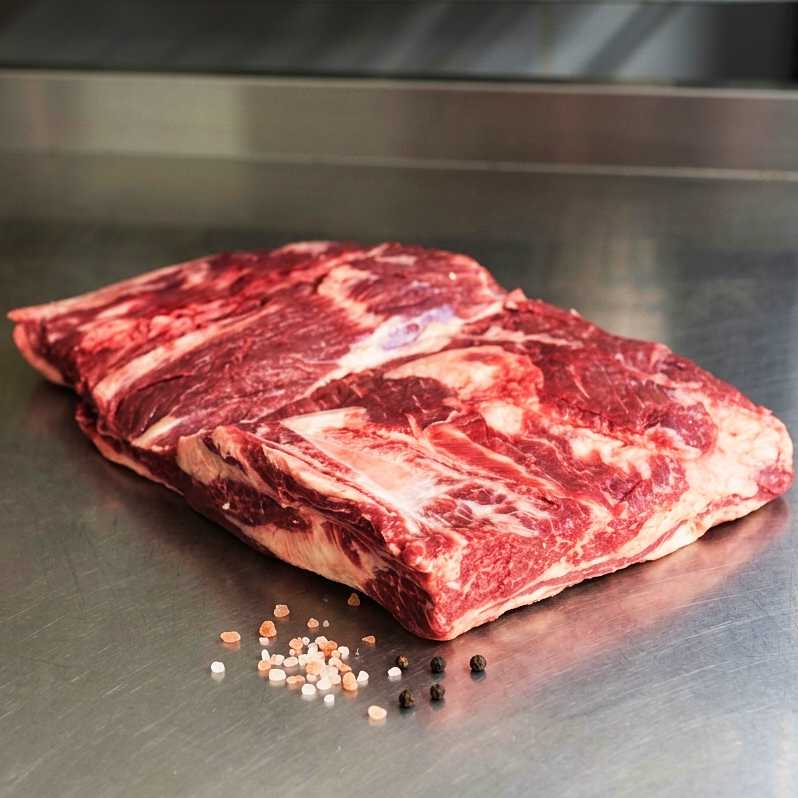
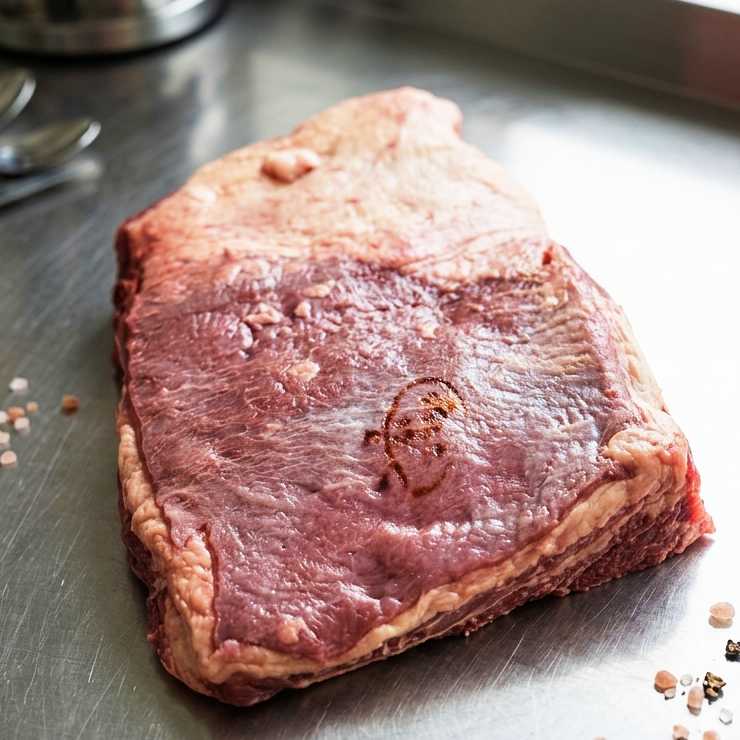
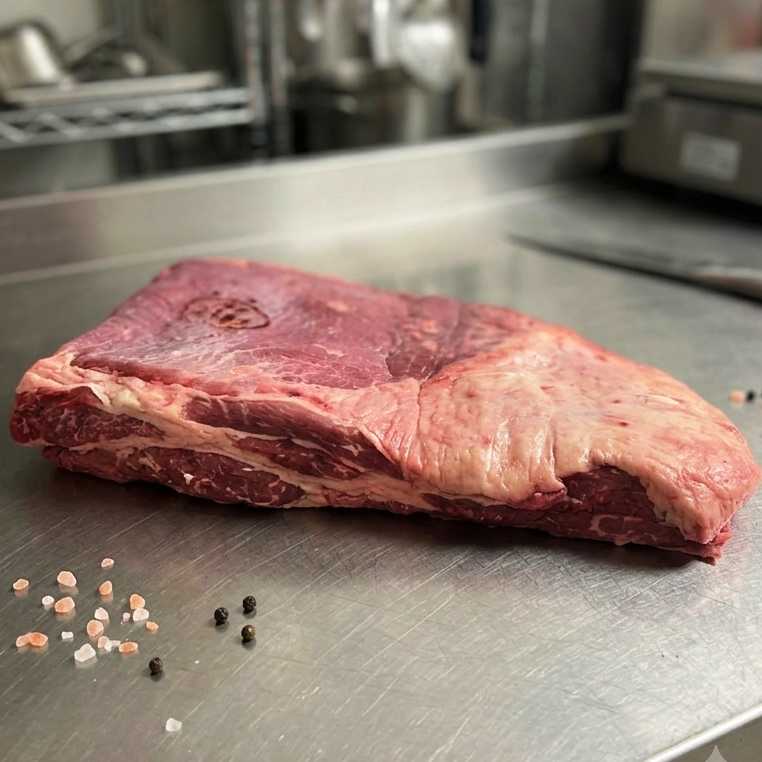
Whole Native Breed Beef Navel / Plate Cut
The beef navel, or plate, is one of the most rewarding low-and-slow cuts on the carcass. It comes from the lower underside of the beef, beneath the rib area and close to the brisket. Think of it as the beef equivalent of belly: richly layered, full of fat, and built for long cooking.
This is not a lean roasting joint. It is a large, whole piece weighing approximately 3.5–4.5kg, with natural variation in shape, fat cover and marbling. That is part of its appeal. It gives experienced home cooks and barbecue enthusiasts plenty to work with.
Our Native Breed beef is selected for eating quality and butchered in the traditional way. The beef is dry-aged on the bone with Himalayan rock salt for a minimum of 28 days before being prepared for sale. With a cut like navel or plate, that depth of beef flavour is matched by the richness of the cut itself.
What is beef navel or plate?
Beef navel is part of the plate section of the animal. It sits towards the belly and lower chest area. It is made up of long muscle fibres, seams of fat and connective tissue.
That structure means two things.
First, it has excellent flavour. The fat carries plenty of beef character and keeps the meat moist during slow cooking.
Second, it needs time. Cook it too quickly and it will be chewy. Cook it gently until the connective tissue breaks down, and it becomes rich, tender and deeply satisfying.
How does it compare with brisket?
Navel and plate are often compared with
brisket, and for good reason. Both cuts suit smoking, curing, braising and long cooking. Both have a bold beef taste and need patience.
The main difference is texture and fat. Brisket has a firmer, more familiar grain. Navel or plate is usually fattier and more layered. It can eat more like beef belly, especially when smoked or braised until soft.
For barbecue, this makes it excellent for sliced beef, chopped beef, burnt ends, tacos, sandwiches and rice bowls. For curing, it is one of the classic cuts for pastrami-style beef.
What is it best for?
This whole beef navel / plate is ideal for cooks who enjoy working with bigger cuts. It can be cooked whole, trimmed and smoked, cured, rolled, braised, or portioned at home.
Use it for:
Barbecue and smoking
Cook it slowly over indirect heat until the fat renders and the meat becomes probe tender. It works well with a simple salt and pepper rub, or a deeper spice mix with paprika, garlic, coriander seed and black pepper.
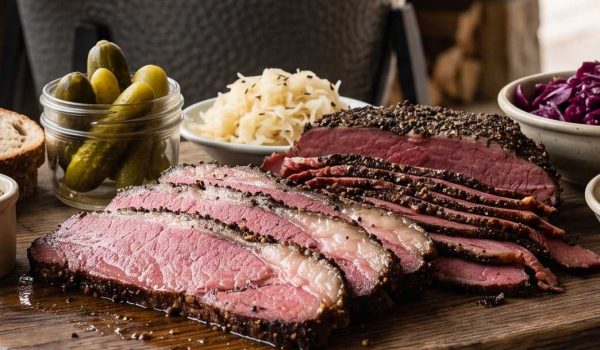
Pastrami-style beef
The navel is a traditional choice for pastrami. Cure it, season it heavily with cracked coriander and black pepper, then smoke or steam until tender.
Burnt ends
Cook the piece until tender, then cube the richer sections. Return them to the smoker or oven with a little glaze, beef dripping or cooking juices.
Slow braises
Cut into large pieces and braise with stock, onions, red wine, tomatoes or beer. The fat and collagen give the sauce real body.
Beef bacon or cured beef belly
The layered fat and meat make this cut suitable for curing and slicing. It needs careful curing and chilling before slicing.
Preparation notes
A whole navel / plate may need trimming before cooking. Leave enough fat to protect the meat, but remove any very thick or hard surface fat that will not render fully.
The grain can change direction across the cut. Check before slicing and cut across the grain where possible. This makes a big difference to tenderness.
Because this is a large whole cut, cooking time will vary. Shape, thickness, fat level and cooking method all affect the result. Use internal temperature as a guide, but judge final doneness by feel. The meat should give easily when probed.
Serving guide
A 3.5–4.5kg whole navel / plate will lose weight during long cooking, especially if smoked. As a guide, expect around 10–14 generous portions, depending on trimming, cooking loss and side dishes.
Serve with pickles, slaw, roast onions, potato salad, beans, flatbreads or soft rolls. It also works well in tacos, loaded fries, chilli, hash, ramen, pies and sandwiches.
Storage and freezing
Your beef will be cut fresh and packed ready to cook or freeze. Freeze on arrival if you are not cooking it within the use-by period. Defrost slowly in the fridge before cooking, allowing plenty of time because of the size of the cut.
Cooking notes
Low-and-slow barbecue method
Trim any very thick surface fat, leaving a protective layer.
Season generously with salt, black pepper and your chosen rub.
Cook indirect at around 110–130°C.
Smoke until the bark has formed and the internal temperature is around 75–80°C.
Wrap in butcher paper or foil if you want to protect moisture.
Continue cooking until the meat is probe tender, often around 93–96°C.
Rest for at least 1 hour before slicing.
Slice across the grain where possible.
Cooking time can vary widely, but allow most of the day for a whole piece.
Oven braising method
Cut the navel / plate into large pieces if needed.
Brown well in a heavy pan.
Add onions, garlic, stock, wine, beer or tomatoes.
Cover tightly and cook at 140–150°C.
Cook until soft and giving, usually 5–7 hours depending on size.
Rest in the cooking liquor, then skim excess fat before serving.
For pastrami-style beef
Cure the navel first, then rinse, season with cracked coriander and black pepper, and smoke or steam until tender. Chill before slicing if you want thin, deli-style slices.
Key cooking advice
This is not a fast-cooking steak or quick roast. It needs time, gentle heat and proper resting. When cooked well, the reward is rich, tender beef with excellent fat, bark and texture.