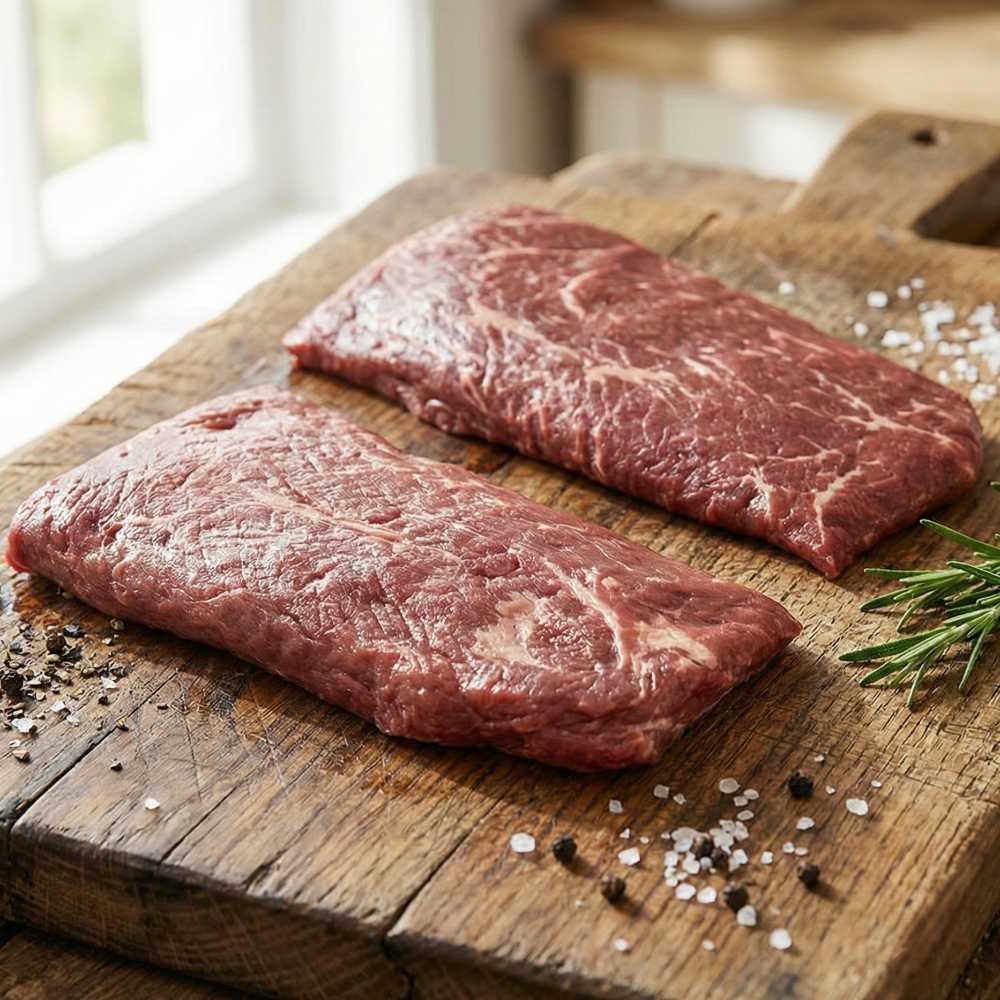
It comes from the featherblade, a muscle from the shoulder of the animal. The shoulder does plenty of work, which gives the beef real depth of flavour. Once the central seam is carefully removed, the remaining steak is tender, neat and fine grained.
That makes flat iron different from many other forequarter cuts. It has more character than fillet, but it is easier to cook than some of the looser-grained cuts such as skirt or onglet. It is lean, but not bland. The natural marbling helps keep it juicy when cooked properly.
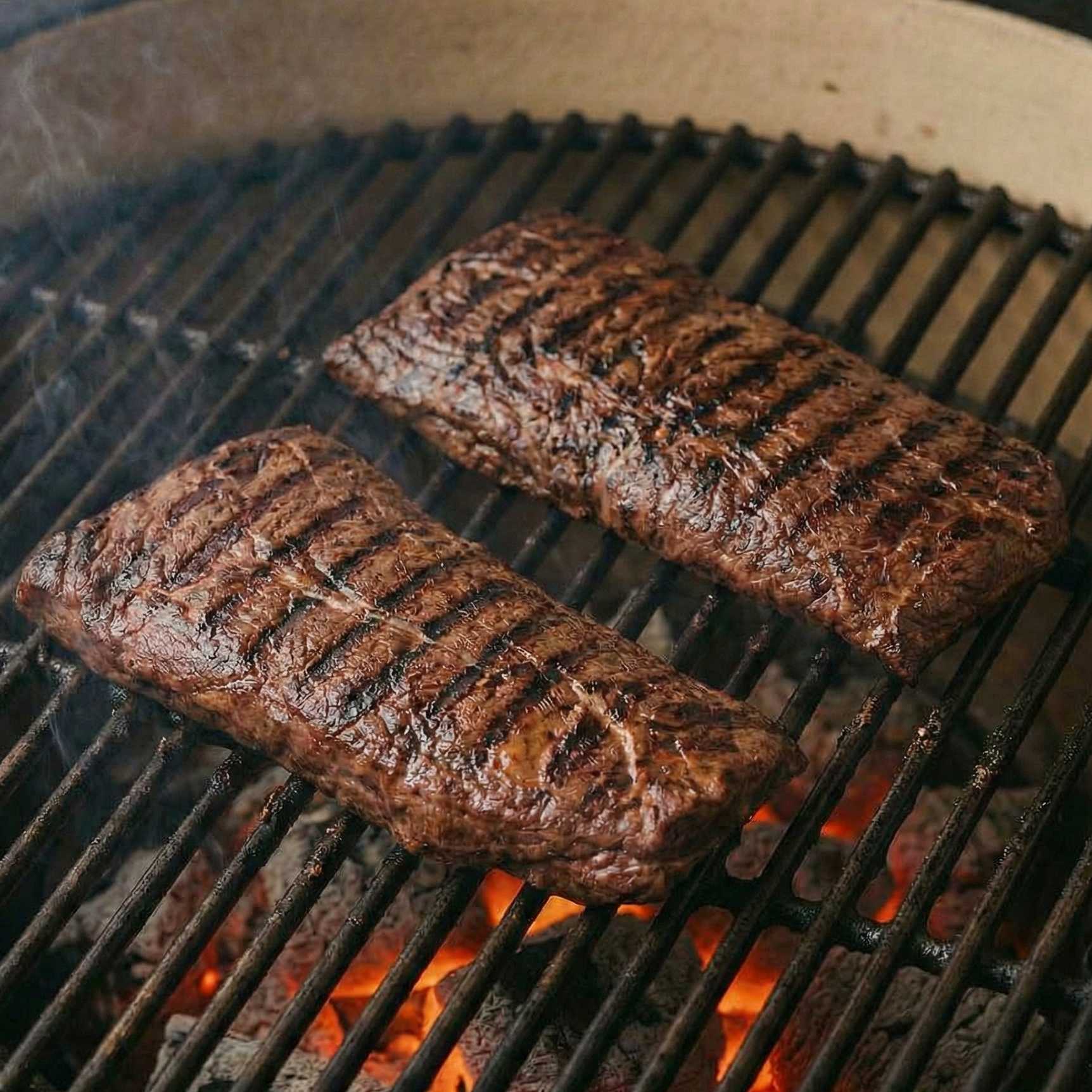
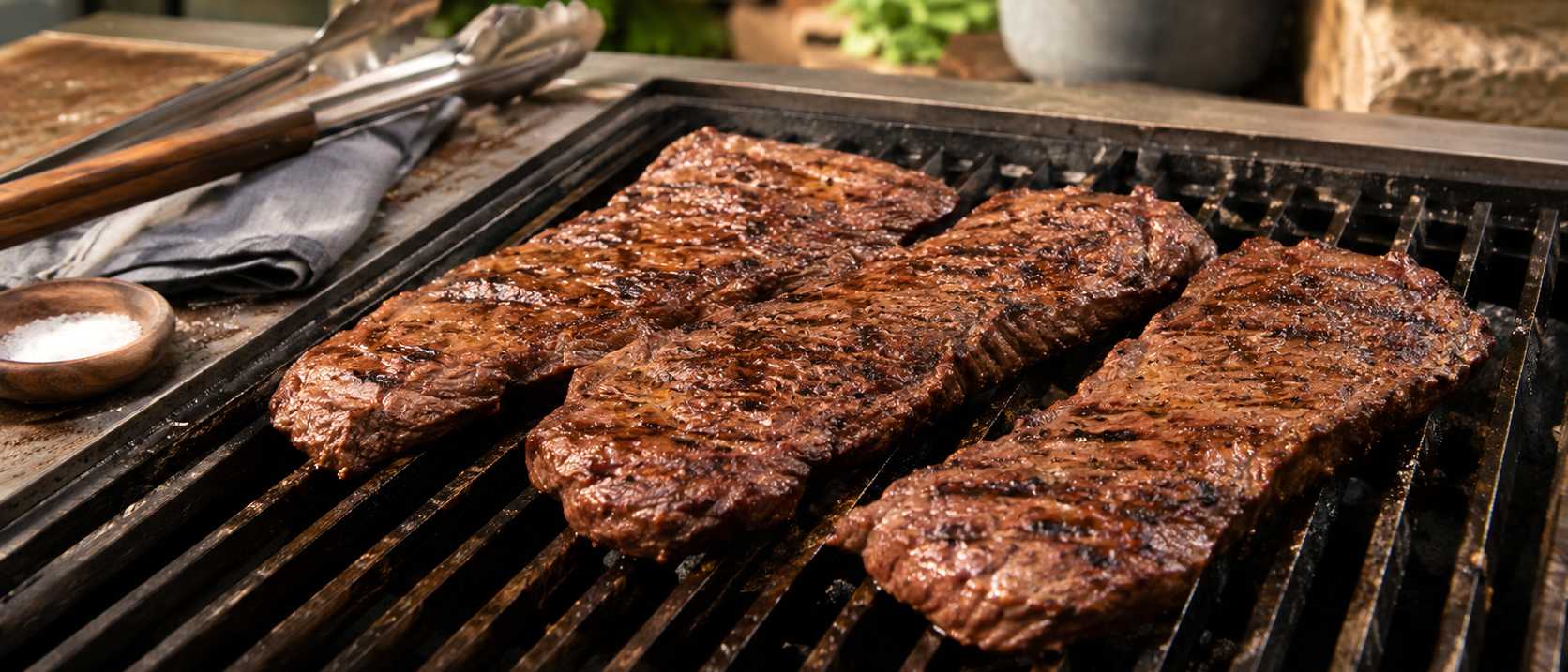
These steaks suit fast, high-heat cooking. Use a heavy frying pan, cast iron skillet, plancha, hot grill or barbecue. The aim is to build a good crust on the outside while keeping the middle pink.
Flat iron is best served rare to medium rare. If it is pushed too far, it can become firm and dry. For best results, aim for around 54–57°C in the thickest part, then rest before slicing.
Always slice flat iron across the grain. This makes a noticeable difference to tenderness.
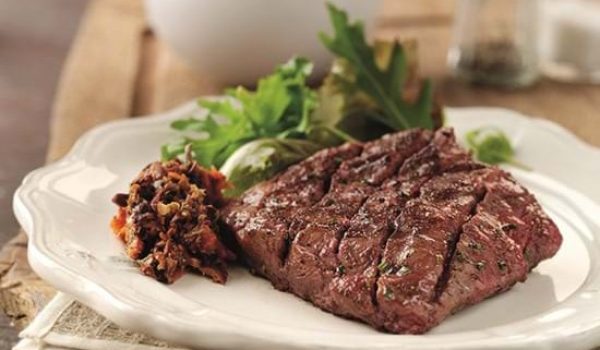
Serve it as a steak supper with chips, mushrooms or salad. It also works well sliced for steak sandwiches, tacos, salads, rice bowls or sharing boards. A simple herb butter, peppercorn sauce or chimichurri is enough.
Each pack contains two steaks. Choose 2 x 284g for two generous portions, or 2 x 340g for larger appetites or sliced sharing.
Delivered fresh and suitable for home freezing.
Remove the steaks from the fridge 30 minutes before cooking.
Pat dry and season well with sea salt.
Heat a heavy pan, grill, plancha or barbecue until very hot.
Cook for around 2–4 minutes per side, depending on thickness and how you like your steak.
For medium rare, aim for an internal temperature of 54–57°C.
Rest for 5–8 minutes before slicing.
Slice across the grain and serve straight away.
Do not overcook flat iron. It is at its best rare to medium rare.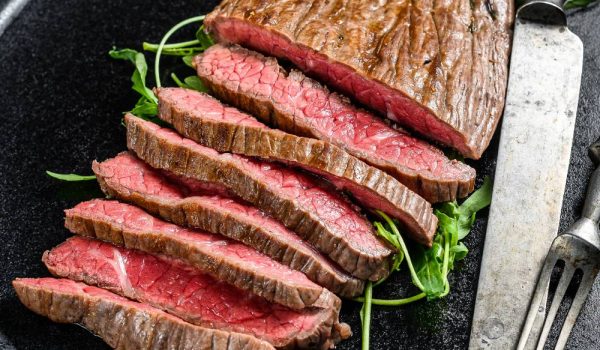
Paul (verified owner) –
Really nice steaks, recommended! It’s just a shame the price has gone up over 17% from just 2 months ago, when prices seem stable elsewhere.
Paul (verified owner) –
Just had flat iron tonight; so much flavour and so tender if cooked rare and cut across the grain. Still have 1/3 left for Thai salad or stir fry!
Thank you!
Michael Richmond (verified owner) –
I bought some native breed flat iron steak. Not had it before so was excited to try it after all that I’d read. Did it on a very hot bbq, 3.5 minutes each side then let it rest for 10 minutes. Sliced it thinly across the grain. It was as tender as could be so absolutely thrilled. Will definitely purchase some more in the future.
Simon Hosken (verified owner) –
Great service, well packaged. Lovely flavour.
Ian Barber (verified owner) –
Great food from Grid Iron
Stuart Weir (verified owner) –
Delicious steaks which were enjoyed by everyone
Chris Drake (verified owner) –
Surprised at taste of this cut which I have not had before. Lean meat that cooked beautifully.
Philip Pease (verified owner) –
Robert Thomas (verified owner) –
Great cut of beef with, (in my opinion), much more flavour and texture than some of the more expensive options.