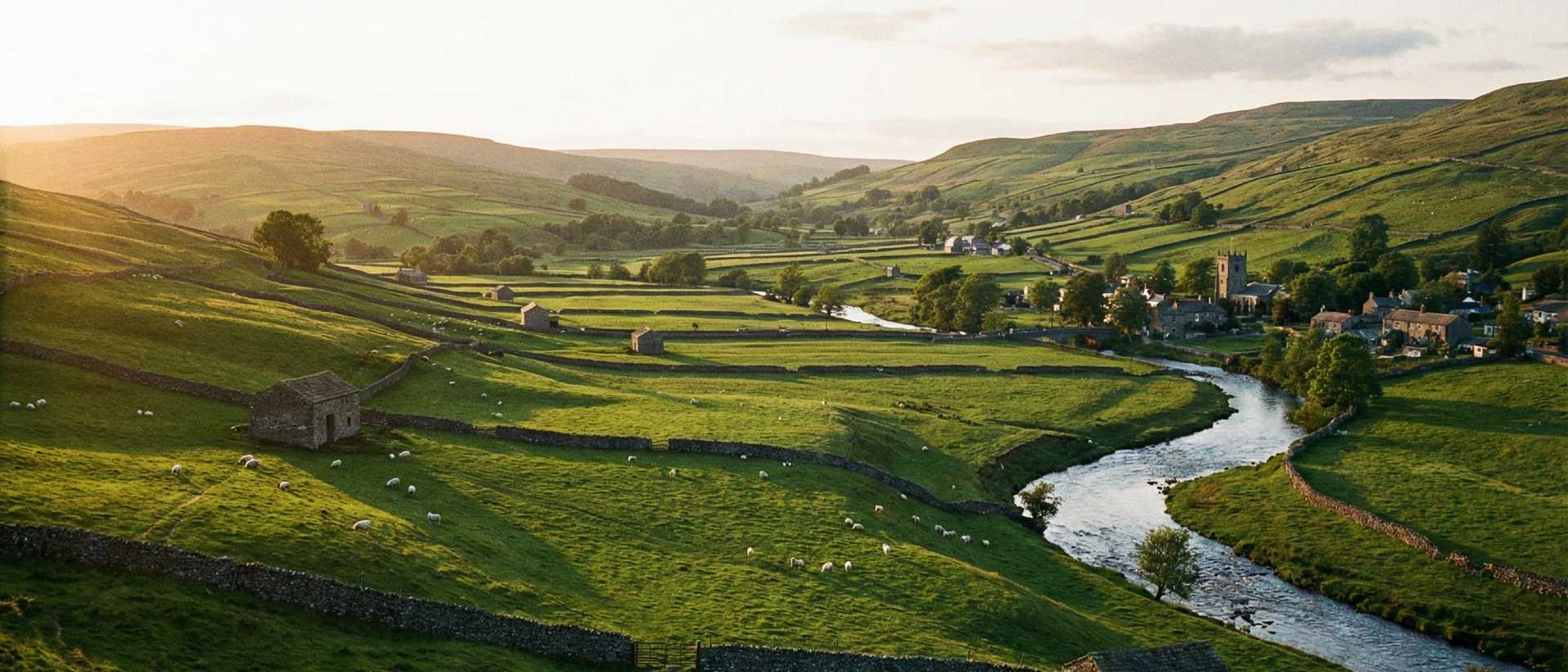
While intensive, industrial livestock farming certainly has questions to answer, the traditional, extensive farming found here in North Yorkshire and the Yorkshire Dales tells a completely different story. In fact, our native breeds—grazing on the rough hills and uplands—might actually be critical to fighting climate change.
Here is why the beef and lamb raised on your doorstep is not the same as the beef raised in a feedlot halfway across the world.
The primary argument against ruminants (cows and sheep) is that they produce methane ($CH_4$) during digestion. This is true. However, recent research—including projects right here in the UK like “Forage for CH4nge“—suggests that what the animal eats drastically changes how much methane they produce.
The Industrial Model: Animals are fed soy and grain to make them grow unnaturally fast. These crops are often imported from deforested regions in South America, carrying a huge carbon footprint before the animal even takes a bite.
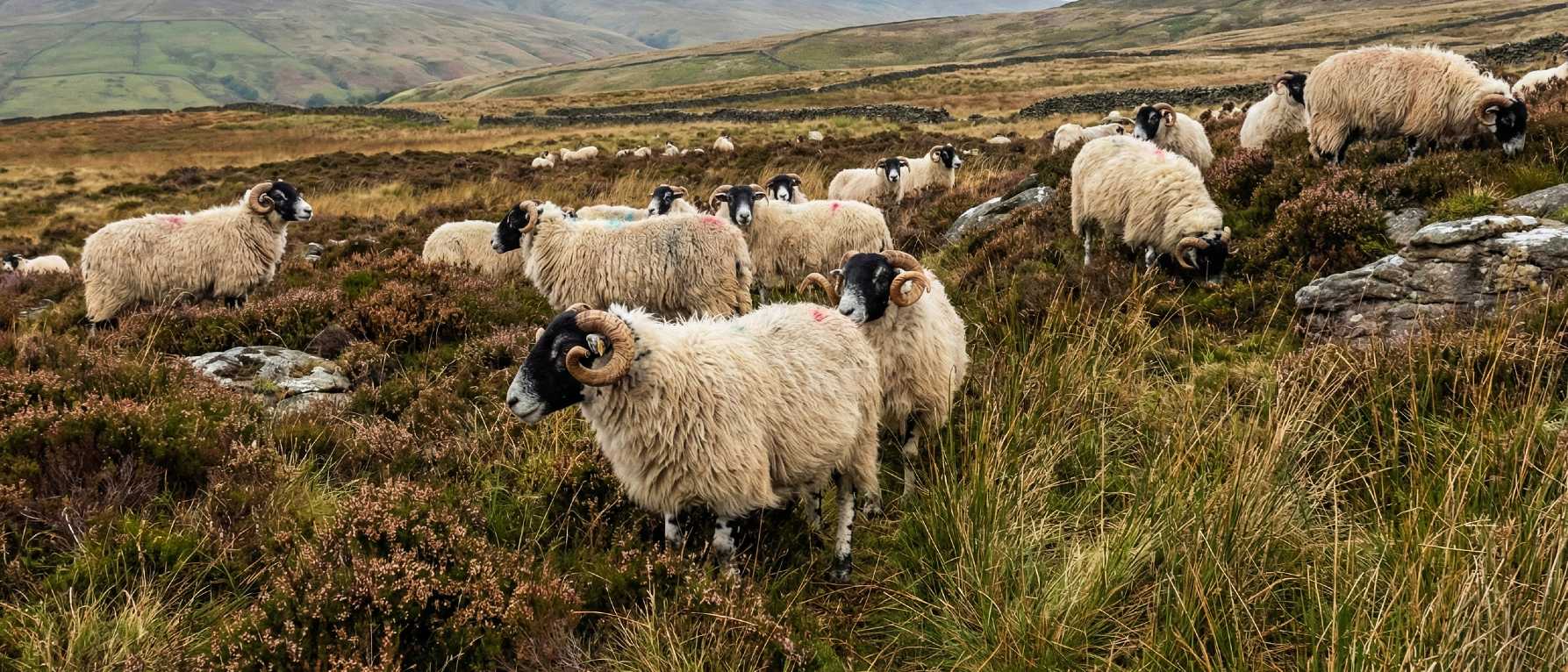
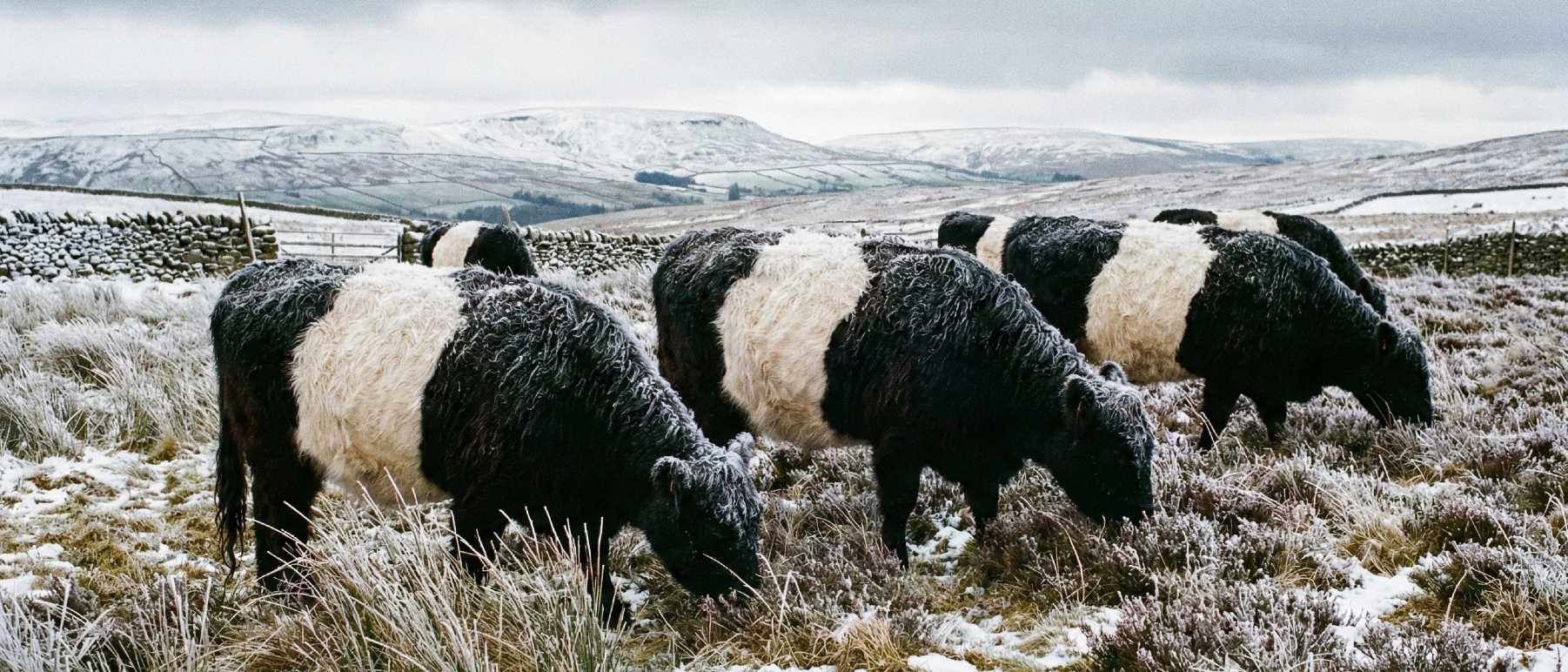
The Yorkshire Model: Our native breeds, like Swaledale sheep or Belted Galloway cattle, are evolved to graze on “rough” pasture. This includes heather, bilberry, wild mosses, and clover.
The Science of Heather: Many upland plants found in the Dales contain high levels of tannins. When livestock graze on these tannin-rich plants, it can naturally inhibit the bacteria in their stomachs that produce methane, significantly lowering their emissions compared to animals fed on standard ryegrass or grain.
We often talk about planting trees to save the planet, but we forget about soil. Peatland and permanent pasture (grassland that isn’t ploughed) are massive carbon stores.
When a cow or sheep grazes a pasture, it nibbles the grass. The plant responds by shedding some of its root system into the soil to balance its size. These roots decompose and lock carbon underground—a process called sequestration.
If we removed animals from the Yorkshire Dales and ploughed the land for crops, that stored carbon would be released into the atmosphere. If we abandoned the land entirely, the scrub that takes over is often less effective at storing carbon than a well-managed, grazed pasture.
Key Takeaway: When you see a herd of cattle in the Dales, you aren’t just seeing food production; you are looking at a solar-powered carbon cycle that keeps our soil healthy.
Commercial farming is often a race to the finish line. How quickly can an animal reach slaughter weight?
Native breeds in North Yorkshire take the “slow food” approach. A native steer might take 30 months to mature, compared to 18 months for a commercial breed. Because they grow slowly on a diet of pure grass:
No Fossil Fuels: They don’t require feed to be harvested by tractors, processed in factories, and shipped on tankers. They harvest their own food.
Biodiversity Engineers: Because they are hardy, they can stay out all winter. Their trampling breaks up bracken and creates nesting sites for birds like Curlews and Lapwings.
Nutritional Density: Research shows that pasture-fed meat is higher in Omega-3 fatty acids and vitamins than grain-fed meat.
Not all meat is created equal. When you choose Native Breed beef, lamb, or pork from North Yorkshire, you are supporting a system that works with nature, not against it. You are helping to maintain the iconic landscape of the Dales, supporting local families, and reducing your carbon footprint by avoiding imported, high-input foods.
So, the next time you enjoy a Sunday roast, you can do so knowing that—if sourced correctly—it’s a choice that supports our environment.