January often brings a flurry of diet plans, detoxes and complicated promises that rarely survive past the second week. The Grid Iron approach is different. It’s about eating well, supporting strength, feeling full, and building habits that make sense in a real working life — rooted in honest Yorkshire meat and simple, nourishing ingredients.
January often brings a flurry of diet plans, detoxes and complicated promises that rarely survive past the second week. The Grid Iron approach is different. It’s about eating well, supporting strength, feeling full, and building habits that make sense in a real working life — rooted in honest Yorkshire meat and simple, nourishing ingredients.
Muscle strength matters more each decade, and the easiest way to support it is to centre meals around good-quality protein.
Grid Iron native-breed meat brings natural depth and richness without additives — ideal for keeping meals satisfying while you cut back on sugar and fast carbs. The aim isn’t to overthink it; simply:
Native-breed meat tends to be richer and more nutrient-dense, so smaller portions go a long way.
There’s a good reason people feel better when they move away from industrial oils and ultra-processed food. Natural fats from beef, pork, lamb and chicken help with satiety and metabolic health.
What this means in practice:
This isn’t a “low-fat” plan — it’s a real-fat plan.
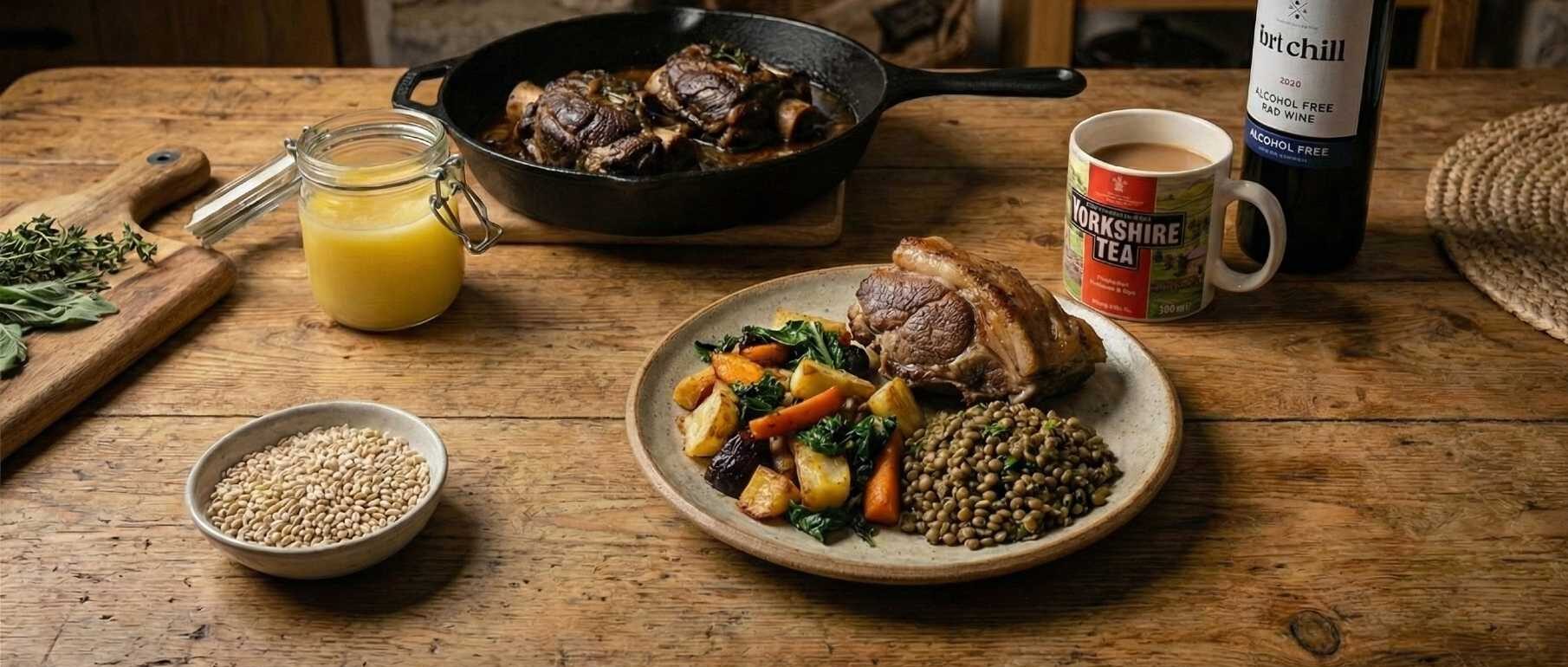
Most people don’t overeat slow carbs: lentils, barley, bulgur, chickpeas, beans. They keep you full, help with digestion, and support steady blood sugar.
They also pair brilliantly with your native-breed meat because they soak up all the juices.
Easy examples:
These dishes feel generous and warming — perfect for winter — but they support fat loss and energy stability rather than working against them.
A “healthy eating” plan only works if it’s enjoyable. Instead of raw salads in January, think warm, comforting sides that still bring colour and nutrients:
The goal is two good handfuls of veg at each meal, cooked in a way you actually want to eat.
January often brings a push to reduce alcohol, but it doesn’t have to feel austere.
A few reliable swaps:
The aim is enjoyment rather than restriction — creating habits that fit your lifestyle rather than battling them.
Not a diet. Just a simple way of plating that keeps things in balance:
This keeps portions sensible, meals filling, and cooking straightforward.
Healthy eating falls apart when it asks too much. So this blueprint keeps things grounded:
Over the next few weeks, we’ll build out a set of recipes that slot naturally into this blueprint: