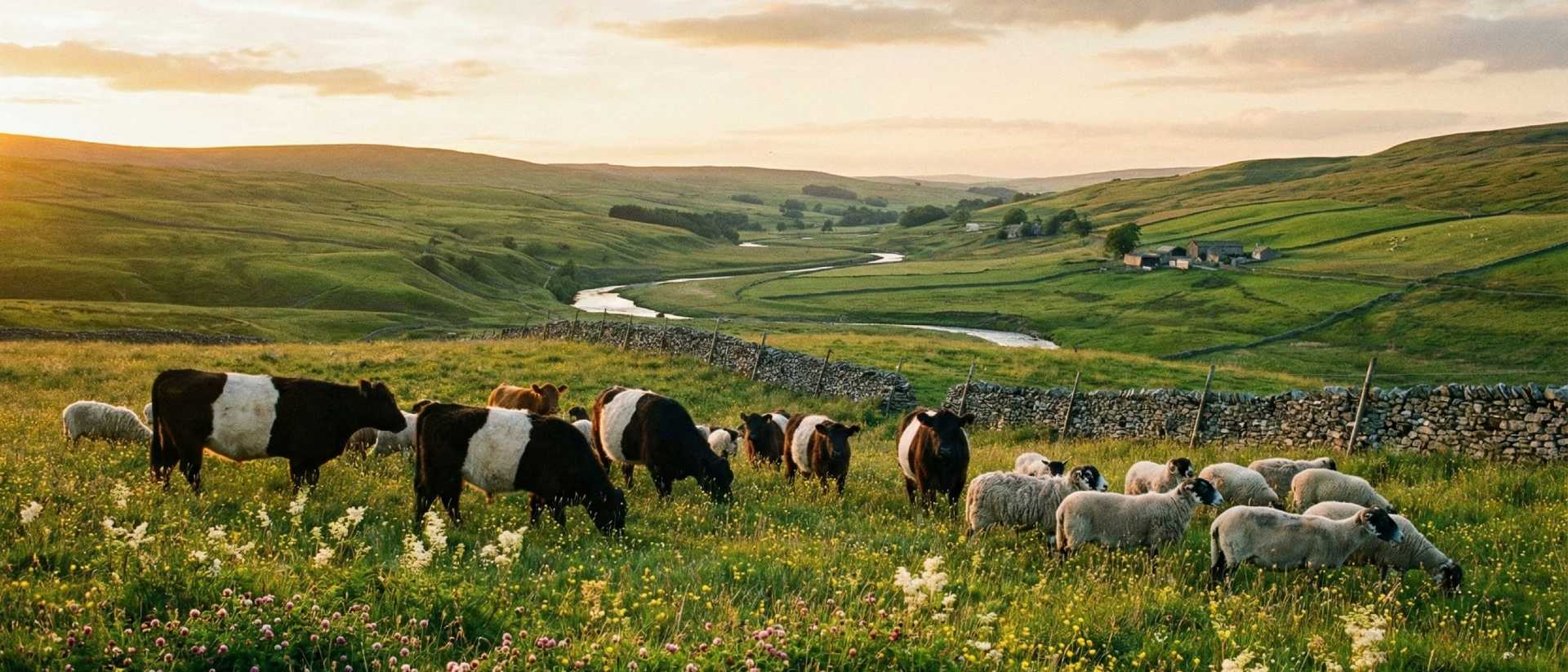
However, conservationists and ecologists in North Yorkshire are increasingly finding that without the specific grazing habits of our native breeds, the delicate balance of the Dales collapses.
Far from being enemies of wildlife, Native Breed cattle, sheep, and pigs are the “bio-engineers” essential to its survival. Here is how they work.
Modern commercial cattle are often grazed on short, uniform grass (ryegrass). But Native Breeds—like the Belted Galloway, Highland, or Shorthorn—thrive on rougher terrain.
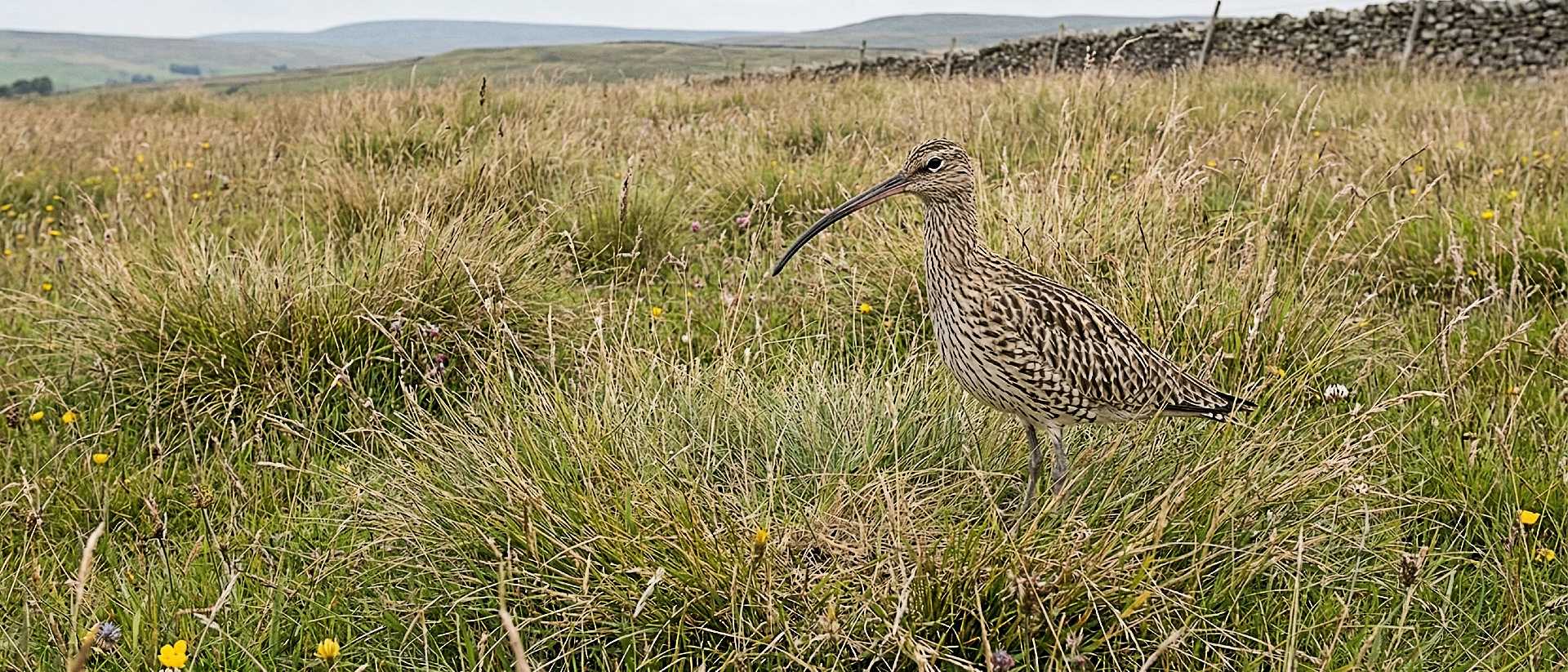
Unlike sheep, which nibble close to the ground, cattle use their tongues to wrap around grass and pull. This creates a messy, uneven height structure in the field known as a “tussocky” sward.
Why this matters:
The Curlew Connection: The Curlew, with its haunting call, is the iconic sound of the North Yorkshire moors. However, they are in decline. Curlews need a mix of tall grass to hide their chicks and short grass to forage for food. Native cattle create this exact architecture naturally.
The Insect Motorway: The messy paths trampled by heavy cattle through bracken create “insect motorways,” allowing butterflies and beetles to move between habitats.
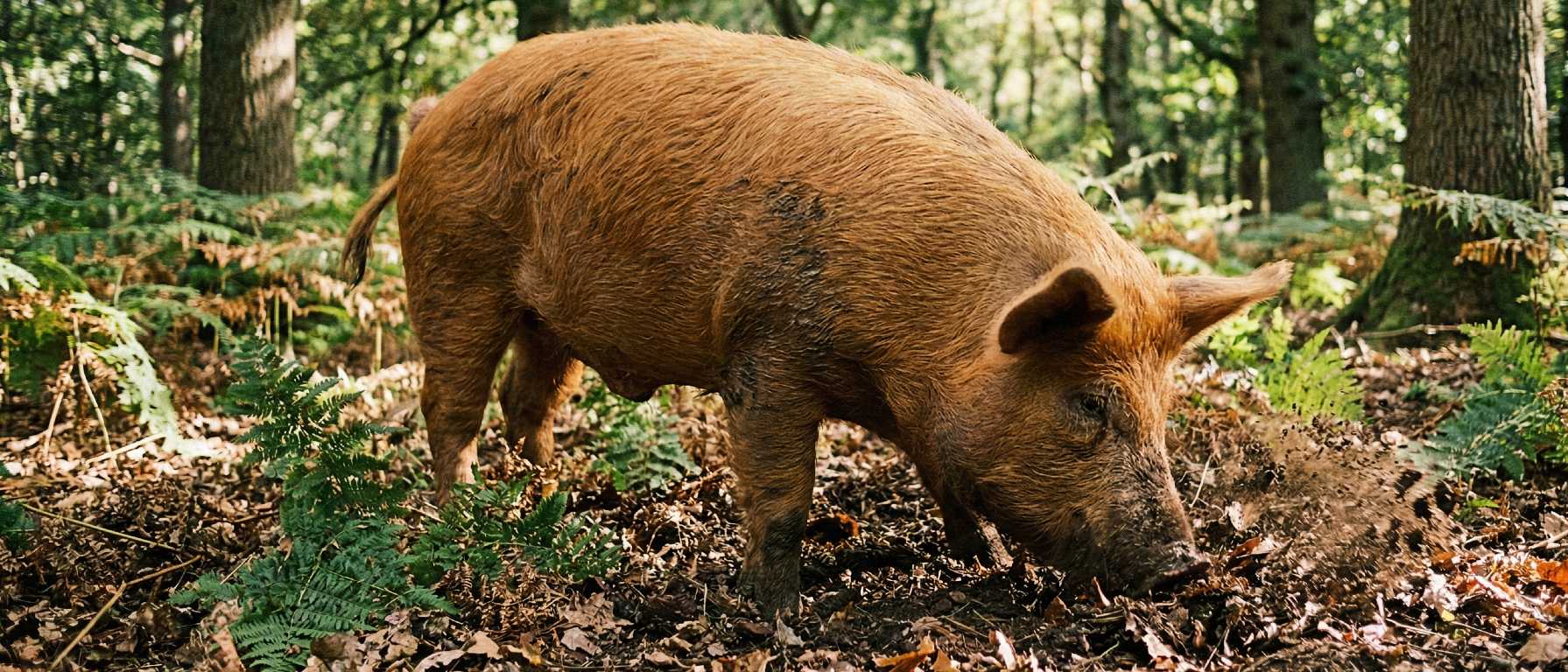
While we often associate the Dales with sheep, native pigs (like the Tamworth or Berkshire) have a vital role to play in woodland and scrub management.
Pigs are the only farm animal that root into the soil. In a regenerative farming system, pigs are used to clear bracken and brambles without using heavy machinery or chemical sprays.
The “Seed Bank” Effect: By turning over the topsoil with their snouts, pigs expose the dormant “seed bank” lying underground. This disturbance often triggers the germination of rare wildflowers and tree seedlings that haven’t seen the light of day for decades. They are the ultimate natural regeneration tool.
It might not be polite dinner table conversation, but we need to talk about dung.
In intensive farming, animals are often treated with preventative antibiotics and wormers. These chemicals pass through the animal and can make their dung toxic to insects.
However, Native Breeds raised in extensive, low-input systems produce “clean” dung. A single cow pat from a pasture-fed animal is a thriving metropolis, supporting up to 250 species of insects, including the vital Dung Beetle.
The Food Chain Effect:
Dung beetles drag waste underground, fertilizing the soil for free.
The beetles provide a crucial food source for the Greater Horseshoe Bat and rare birds.
No livestock = no dung = no beetles = no bats.
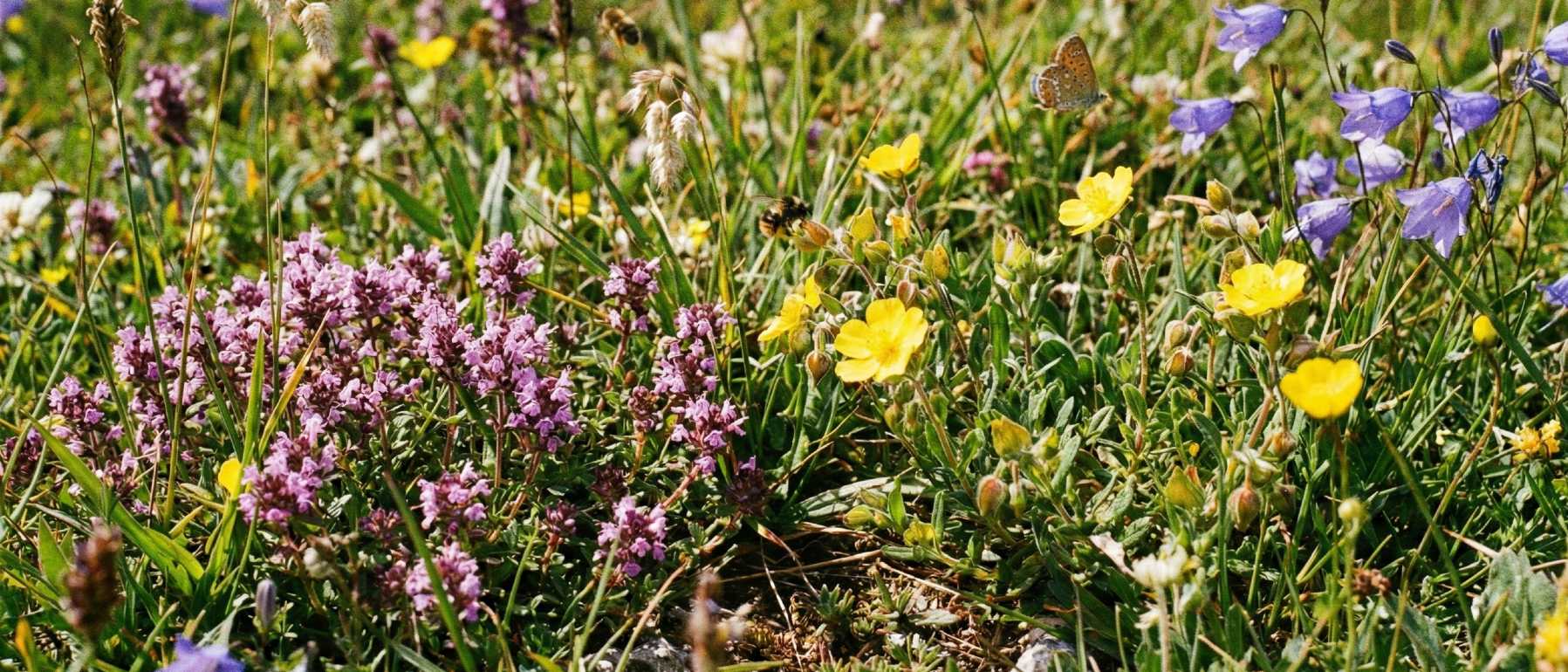
Sheep often get a bad press as “woolley maggots” that strip the hills bare. This is true only if the wrong breed is put in the wrong place at high densities.
Native breeds like the Swaledale or Dalesbred are light-footed. On limestone grassland—one of the rarest habitats in the UK—they are essential. They graze out the coarse, dominant grasses that would otherwise choke delicate wildflowers like Wild Thyme and Rockrose.
Without the “Golden Hoof” of the sheep to keep the scrub at bay, these flower-rich meadows would disappear under a canopy of bracken and coarse scrub within a decade.
When you buy pork, lamb, or beef from North Yorkshire’s native herds, you aren’t just buying a meal. You are funding the conservation of the landscape.
You are paying for the “architects” that keep the Curlews nesting. You are supporting the “ploughs” that help wildflowers bloom. You are ensuring that the Dales remain a living, breathing ecosystem, rather than a silent monoculture.