Collagen is a structural protein found in connective tissue — tendons, ligaments, skin and the fibres that hold muscles together. Animals that move more, or support more weight, develop more connective tissue, which is why these cuts are firmer and less yielding when raw.
When collagen is cooked slowly with moisture, it breaks down into gelatine. This is where the magic happens: meat becomes tender, sauces gain body, and broths set lightly when chilled.
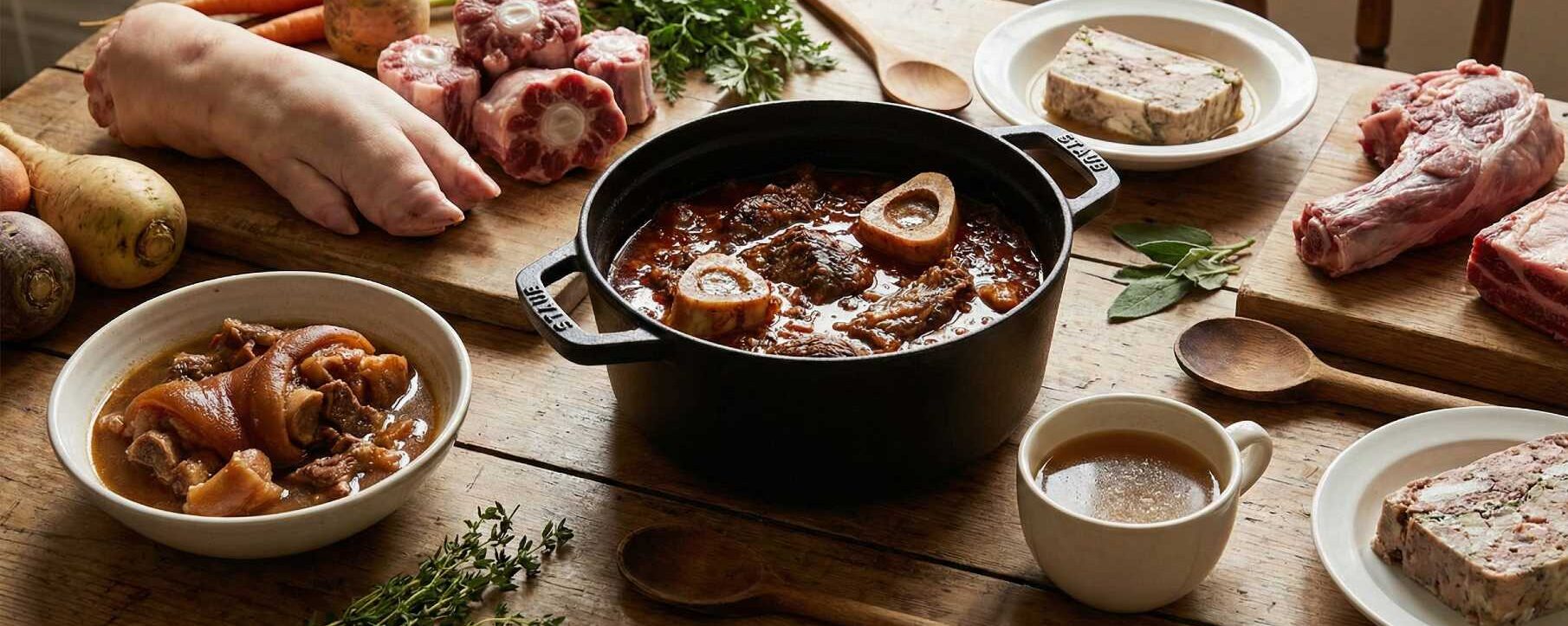
One of the most collagen-rich cuts on the carcass. Taken from the lower leg, it works hard all its life. Shin rewards slow cooking with a deep, savoury character and a naturally thickened sauce — no flour required.
Best uses: braises, ragùs, slow-cooked curries, classic stews.
A tail muscle wrapped around bone, cartilage and connective tissue. Oxtail produces exceptional gelatine and richness, making it ideal for broths and long-simmered dishes.
Best uses: soups, stews, pressure-cooked dishes, deeply savoury sauces.
Pork hock is rich in skin, sinew and bone. When cooked gently, it yields silky gelatine that gives dishes body and a satisfying mouthfeel.
Best uses: slow braises, stocks, terrines, split pea soups.
Pork cheeks are taken from the facial muscles of the pig and are naturally rich in connective tissue. The so-called oyster cut refers to the neat, rounded section of the cheek, prized for its balance of meat, fat and collagen.
When cooked slowly, pork cheeks soften into a deeply tender texture while retaining their shape, with the collagen breaking down to enrich the cooking liquor. They deliver a richness that feels indulgent without heaviness and work exceptionally well in small portions.
Best uses: slow braises, red wine or cider-based dishes, pressure cooking, refined comfort dishes where texture is key.
Pork trotters are one of the most collagen-dense cuts available. Made up largely of skin, cartilage and connective tissue, they contain very little meat but an exceptional amount of natural gelatine. When cooked slowly, trotters release this gelatine into the cooking liquid, giving stocks, sauces and braises a deeply satisfying texture.
Traditionally used as a foundation rather than a centrepiece, pork trotters are invaluable for enriching broths and stews without overpowering other ingredients.
Best uses: stocks and broths, terrines, slow braises, adding body to stews and sauces.
Short ribs combine meat, bone and connective tissue in near-perfect balance. They hold together during long cooking and deliver a luxurious texture when done properly.
Best uses: slow braises, low-and-slow barbecue, red wine dishes.
Mutton shank takes everything that works about lamb shank and intensifies it. From an older animal, the connective tissue is more developed, resulting in even higher collagen content and a deeper, more savoury character once cooked.
Mutton shank benefits from longer cooking than lamb, but the reward is meat that holds its shape while becoming richly tender, with sauces that naturally thicken and carry a real sense of warmth and substance.
Best uses: long, slow braises, robust stews, spiced dishes, make-ahead meals that improve with reheating.
Collagen itself is tough when heated quickly. But given time — usually above 70–80°C with moisture — it converts into gelatine. This process:
This is why slow cooking isn’t optional for these cuts — it’s essential.
From a nutritional point of view, these cuts bring more than just comfort:
These cuts also align naturally with nose-to-tail eating, making better use of the whole animal.
There’s a quiet shift back towards slower cooking and less waste. Collagen-rich cuts are:
They reward time rather than intervention, which fits well with modern kitchens that favour ovens, slow cookers and multi-cookers ticking away in the background.
Cook low and slow
Rushing these cuts only tightens them. Gentle heat and patience are key.
Use moisture
Stocks, wine, tomatoes or even water help collagen convert properly.
Rest matters
Many collagen-rich dishes improve after resting or reheating the next day.
Don’t skim everything
That glossy layer on top is part of the appeal.
Collagen-rich cuts are not second-best — they’re simply different. They carry the character of the animal’s working life and, when treated with respect, deliver depth, nourishment and comfort that quick-cook cuts can’t match.
They’re traditional for a reason, and once you understand how they behave, they become some of the most reliable and rewarding cuts you can cook with.
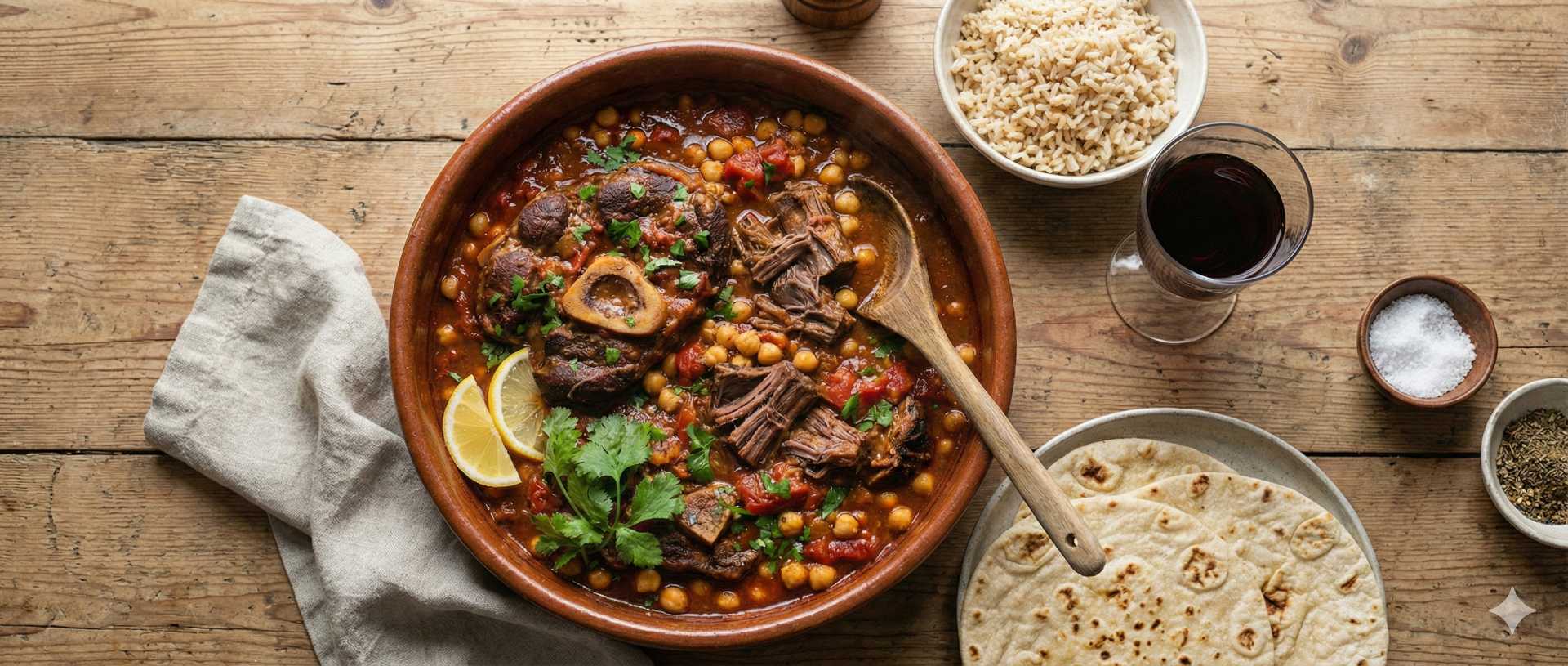
We’ve put together a collection of collagen rich recipes.