FRESH, NOT FROZEN
DELIVERY FREE OVER £70
PICK DELIVERY DATE AT CHECKOUT
FROM LOCAL FARMS
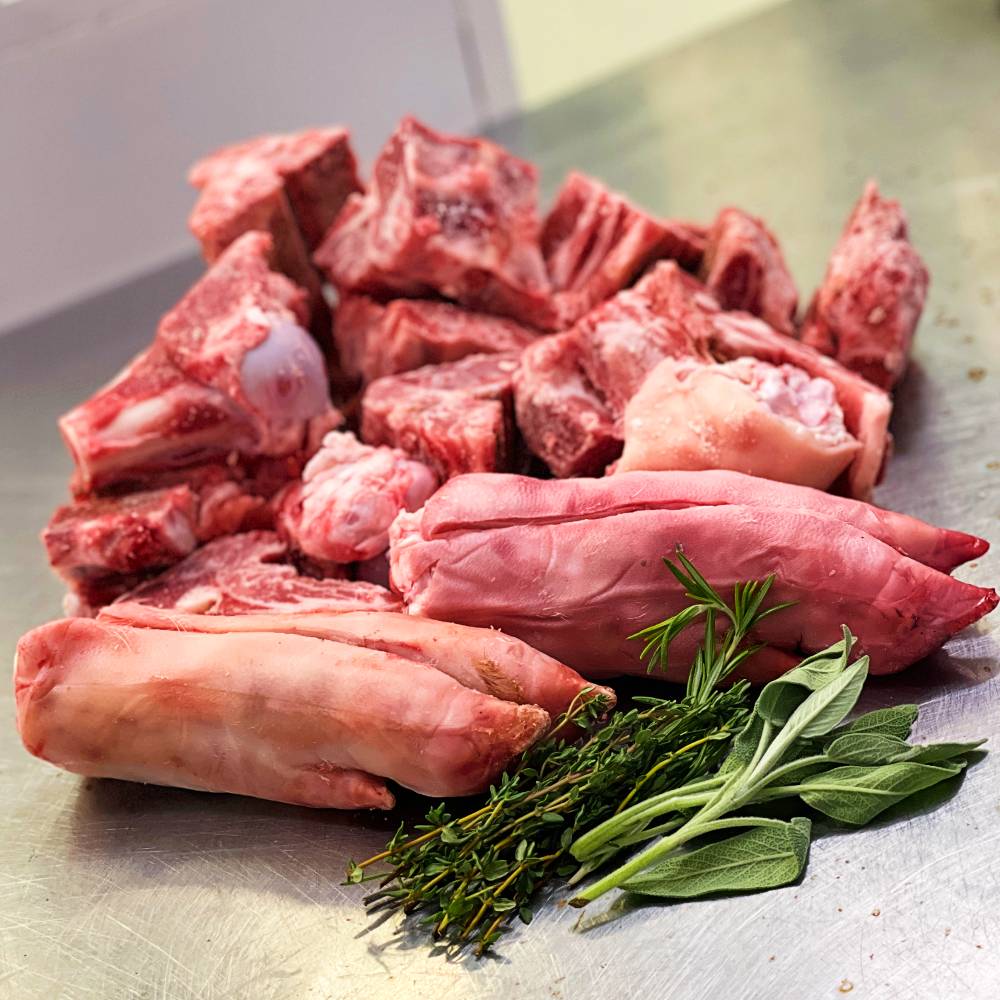
Fergus Henderson and trotter gear are almost synonymous in the world of modern British cuisine. Henderson is widely credited with popularising the concept of nose-to-tail eating in the UK, a philosophy that embraces the use of the whole animal, including the trotters. His influence has led to a resurgence of interest in cooking with all parts of the animal, something that we’ve embraced from the outset at Grid Iron.
Inspired by Fergus, we’ve been experimenting with our own, collagen rich, pork and trotter jelly and we’ve put together a selection to make your own at home.
£18.10 Original price was: £18.10.£16.30Current price is: £16.30.
Trotter gear, a rich, gelatinous broth made from simmered pig’s feet, embodies this ethos perfectly. It encapsulates the idea of using often-overlooked parts of the animal to create something deeply tasty and remarkably versatile.
In fact, trotter gear features in Henderson’s cookbook, “The Whole Beast: Nose to Tail Eating,” where he details how to prepare and use it. He argues that the collagen-rich substance can enhance the texture and depth of various dishes, from sauces and stews to pie fillings, adding both a luxurious mouthfeel and an elevated flavour profile. It’s precisely the kind of ingredient that exemplifies Henderson’s culinary philosophy—humble in origin but capable of transforming a dish into something extraordinary.
Pork and Trotter Jelly is imbued with deep, rich flavours and excellent gelatinous qualities. It’s a component made primarily from pork bones and pig’s trotters and vegetables, simmered slowly to extract the collagen from the bones and connective tissue. The result is a tasty, jelly-like substance that’s ideal for adding both richness and depth to a wide range of dishes or diluting with water and drinking straight.
The process of making this jelly is a fine example of nose-to-tail eating, the culinary tradition that advocates using every part of the animal, a practice very much in line with ethical farming. Making it isn’t particularly challenging, but it does require some time and attention. You’ll want to clean and blanch the trotters first to remove any impurities. After that, they’re simmered along with the bones and a medley of vegetables such as carrots, onions, and celery, as well as herbs and seasonings. After several hours of cooking, the mixture is then strained, and the remaining liquid is cooled until it sets into a jelly.
Given its high collagen content, the jelly offers various health benefits, including supporting joint and skin health. Nutritionally, it’s a powerhouse rich in amino acids like glycine and proline.
In the kitchen, it’s extraordinarily versatile. It can be used to enrich sauces, gravies, and stews, providing a silky texture and complex flavour that can lift even the most humble dish.
Moreover, it aligns rather well with the trend of ethical, locally-sourced eating. By using the trotters, you’re helping to ensure that as much of the animal as possible is put to good use, which is an ethos that resonates with a growing number of conscientious consumers today.
So, if you’re looking to add an extra layer of flavour to your cooking or you need the nutritional benefits, pork bone and trotter jelly is a worthy addition to your fridge or freezer.
Reviews
There are no reviews yet.