METHOD
Conventional oven - covered slow roast
- Prepare. Remove the beef from the fridge about 30 minutes before cooking. Pat dry. Season with the salt and pepper. Heat the oven to 160°C conventional / 140°C fan.
- Brown the beef. Heat 1 tbsp dripping in a large heavy, ovenproof casserole over a medium-high heat. Brown all sides for about 8-12 minutes in total. Transfer to a plate.
- Build the base. Add the remaining dripping, onions, carrots and celery. Cook for 8-10 minutes until lightly coloured. Stir in the garlic for a minute. Add thyme and bay.
- Cover tightly. Sit the beef on the vegetables, fat side upwards if there is a clear fat cap. Return any resting juices. Fit a tight lid; use a layer of foil beneath a loose-fitting lid if necessary. Do not add the stock at the outset for this own-juices version.
- Slow roast. Cook for approximately 4-6 hours for a 2-2.5kg joint. Start checking after 3½ hours. If the base threatens to burn or dry out, add 100-200ml of the reserved stock and reseal. Keep the lid on as much as possible.
- Judge tenderness. The beef is ready when a skewer slides into the thickest part with very little resistance. Slow-cooked chuck often reaches roughly 90-96°C at this stage, but probe tenderness, not a fixed internal temperature, is the deciding test. If it is still firm, keep cooking and check again in 30-minute intervals.
- Rest. Lift the meat onto a warm platter, cover loosely and rest for 25-30 minutes. It may be soft enough to separate; handle it carefully.
- Make the gravy. Strain the casserole juices into a jug. Skim excess fat, reserving 1 tbsp. In a saucepan, heat the reserved fat and stir in 20g flour for 1 minute. Slowly whisk in the juices and enough stock to make 500-650ml. Simmer 8-10 minutes, add Worcestershire sauce if using, season and strain if preferred. If the casserole yielded very little liquid, make the gravy with extra stock and the browned onion base.
- Prepare the sides. About 75 minutes before serving, peel and cut the potatoes into 5cm pieces. Parboil for 8-10 minutes, drain, steam-dry and roughen. Heat the dripping in a separate tray. Roast at 220°C conventional / 200°C fan for 50-60 minutes, turning twice. To make this work with one oven, prepare the potatoes while the beef finishes and raise the oven temperature once the joint is resting; allow extra resting time or use a second oven if needed. Roast the carrots and parsnips for 35-45 minutes, and simmer the cabbage for 4-5 minutes before tossing with butter.
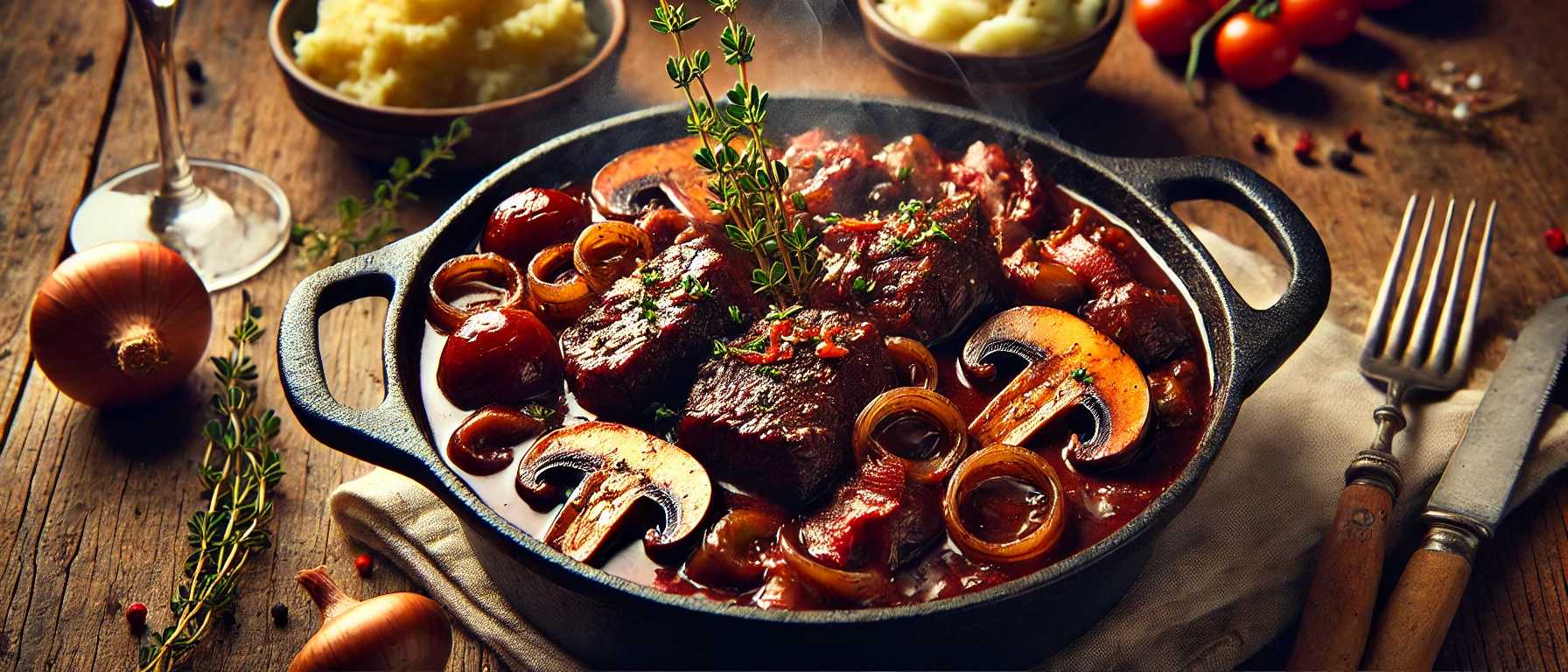
- Carve and serve. Cut thick slices across the grain, changing direction where the chuck muscles run differently. If the roast falls apart, arrange generous pieces rather than forcing thin slices. Serve with roast potatoes, vegetables, Yorkshire puddings, horseradish and hot onion gravy.
Ninja Foodi alternative - pressure cook
Use a Ninja Foodi multi-cooker with a Pressure function. A 2-2.5kg joint is too large for some models. Check the pot capacity, the maximum-fill line and the manual's minimum pressure-cooking liquid. If needed, cut the joint into two large pieces.
- Season and sear. Use Sear/Sauté and 1 tbsp dripping to brown the beef in stages, about 8-12 minutes total. Remove it. Add the onions, carrots and celery; cook 5-7 minutes. Add garlic, thyme and bay.
- Add liquid. Pour in 300ml beef stock, or the greater minimum specified by your model. Scrape the base clean so no browned bits can trigger a burn warning. Return the beef to the pot.
- Pressure cook. Lock the pressure lid and cook on HIGH pressure for 90 minutes as a starting point for a 2-2.5kg joint. Allow 15-20 minutes of natural pressure release, then release any remaining pressure according to your model's instructions. Allow extra time for pressure build-up.
- Check. Test with a skewer. If still firm, pressure cook for another 10-15 minutes and release safely. Large or unusually thick joints may need longer.
- Rest and make gravy. Lift the meat out and rest for 20-30 minutes. Strain or retain the onions, skim excess fat from the liquid and use Sear/Sauté to reduce it. Thicken with a little flour slurry or a separately cooked roux if required. Add resting juices.
- Cook the accompaniments separately. Roast potatoes at 220°C conventional / 200°C fan for 50-60 minutes after parboiling; roast carrots and parsnips for 35-45 minutes. Cook cabbage on the hob and make Yorkshire puddings in the oven.
- Serve. Carve across the grain if it holds together, or lift into generous pot-roast portions and spoon over the gravy.