Grid Iron Gourmet
Chuck roast can be a fine centrepiece for Sunday lunch, but it needs a different approach from a rib or sirloin joint. This richly marbled shoulder cut rewards patient cooking. The method you choose decides whether the beef arrives in thick, tender slices, soft pot-roast pieces or smoky strands.
There are six useful ways to cook chuck roast. Here is what each one does best, how much time to allow and which method we would choose for a traditional Sunday dinner.
For a classic roast dinner with gravy, a covered slow roast or oven pot roast is the strongest starting point. A slow cooker gives softer, often pull-apart beef. Pressure cooking saves time. Smoking adds bark, while sous vide is the route to a pinker, sliceable finish.
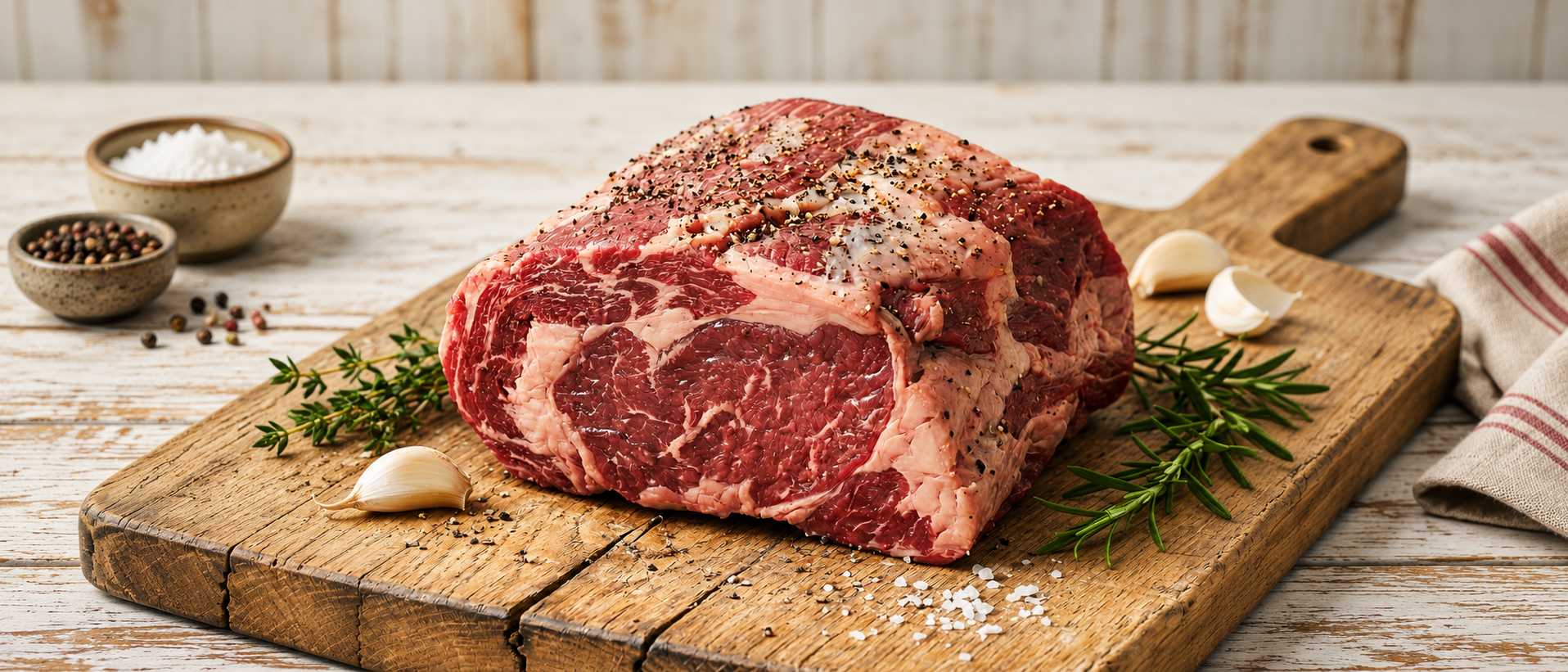
Chuck comes from the shoulder and contains connective tissue and intramuscular fat. Long, gentle cooking softens that structure and creates a juicy, rich result. It is not simply a less expensive version of a quick-roasting joint.
Our Native Breed Beef Chuck Roast comes in 2-2.5kg and 3-3.5kg sizes. The times below are guides for a 2-2.5kg joint; thickness, shape, equipment and the finish you prefer all matter. Test for tenderness rather than trusting the clock alone.
Brown the beef well, soften onions and carrots in the same casserole, then add about 300-500ml beef stock so the liquid comes only partway up the joint. Cover tightly and cook at around 150°C conventional / 130°C fan for approximately 4-6 hours.
This gives plenty of deeply savoury gravy and very forgiving, tender beef. Lift it out when a skewer slides in easily, but before it breaks into strands if you hope to carve broad slices. The result is closer to a traditional braise than dry roast beef.
Brown the joint and rest it on a bed of onions, celery and carrots in a heavy, tightly covered casserole. Cook at around 160°C conventional / 140°C fan. Allow roughly 4-6 hours for 2-2.5kg, beginning checks earlier; add a splash of stock only if the pan looks dry.
The vegetables release moisture and the beef supplies its own cooking juices. You get a stronger roast-beef character and a smaller quantity of concentrated gravy. This is our preferred method for a Sunday lunch that should still look and eat like a roast joint.
Sear the beef first. Put the onions and vegetables in the base of the slow cooker, add roughly 200-300ml stock, and cook on LOW for about 8-10 hours. Avoid lifting the lid repeatedly.
Expect soft, succulent beef that may break apart rather than carve neatly. Reduce the cooking liquid in a saucepan for a proper gravy. This is ideal when you want the work done early and lunch is not tied to a precise oven schedule.
Use Sear/Sauté to brown the joint and soften the onions. Add enough stock to meet your Foodi model’s minimum-liquid requirement, typically at least 250ml, and use HIGH pressure for approximately 90-110 minutes for a joint around 2-2.5kg. Allow a natural pressure release of at least 15-20 minutes, then check tenderness.
Pressure cooking is the useful shortcut. The beef tends towards a pot-roast texture, not a dry-roasted crust. Reduce the cooking liquid on Sear/Sauté to finish the gravy. Never fill above the pressure-cooking maximum mark, and check that the joint fits your particular machine.
Season the whole joint and smoke over oak or another suitable hardwood at around 110-120°C. Once a dark bark has formed, wrap if needed and continue until the meat is probe-tender. Allow roughly 7-10 hours or more, depending on the joint and smoker.
A properly smoked chuck roast develops a dark crust and deep smoke taste. It can be sliced thickly or pulled, rather like a smaller brisket. Excellent for a relaxed, less traditional Sunday lunch, but not the obvious choice with Yorkshire puddings and classic gravy.
Vacuum-pack the seasoned joint and cook in a temperature-controlled water bath, for example around 57-58°C for 24-36 hours, then dry the surface thoroughly and sear hard before carving. Only use equipment capable of accurate temperature control and follow established time-and-thickness food-safety guidance.
Sous vide gives the greatest control over a pink centre and can soften the shoulder over time without taking it to pot-roast temperatures. It needs advance planning and produces a different texture from long-braised chuck.
A conventional medium-rare roast of chuck often leaves firm connective tissue behind. Dry roasting to the same temperature as sirloin will not make it behave like sirloin. For reliably tender Sunday beef, cook the shoulder slowly until it yields; for a pink centre, use a properly controlled long sous vide cook.
If carving matters, start checking once a skewer enters the thickest part with little resistance. Lift the joint carefully, rest it, and carve across the grain with a sharp knife. Chuck may contain different muscles and grain directions, so turn the piece as you carve.
If it is still firm, continue cooking. If it starts separating naturally, embrace the softer pot-roast style. A useful probe-temperature range for conventional slow cooking is often around 90-96°C, but the texture is the final test.
Crisp beef-dripping roast potatoes, Yorkshire puddings, carrots and parsnips, buttered Savoy cabbage, horseradish sauce and hot onion gravy all work well. The beef is rich enough that the vegetables and gravy need no complicated seasoning.
For the gravy, strain and skim the roasting juices. Simmer them with stock until concentrated, then thicken lightly with flour if required. It should taste of beef and onions, not flour.
Grid Iron Gourmet Recipe
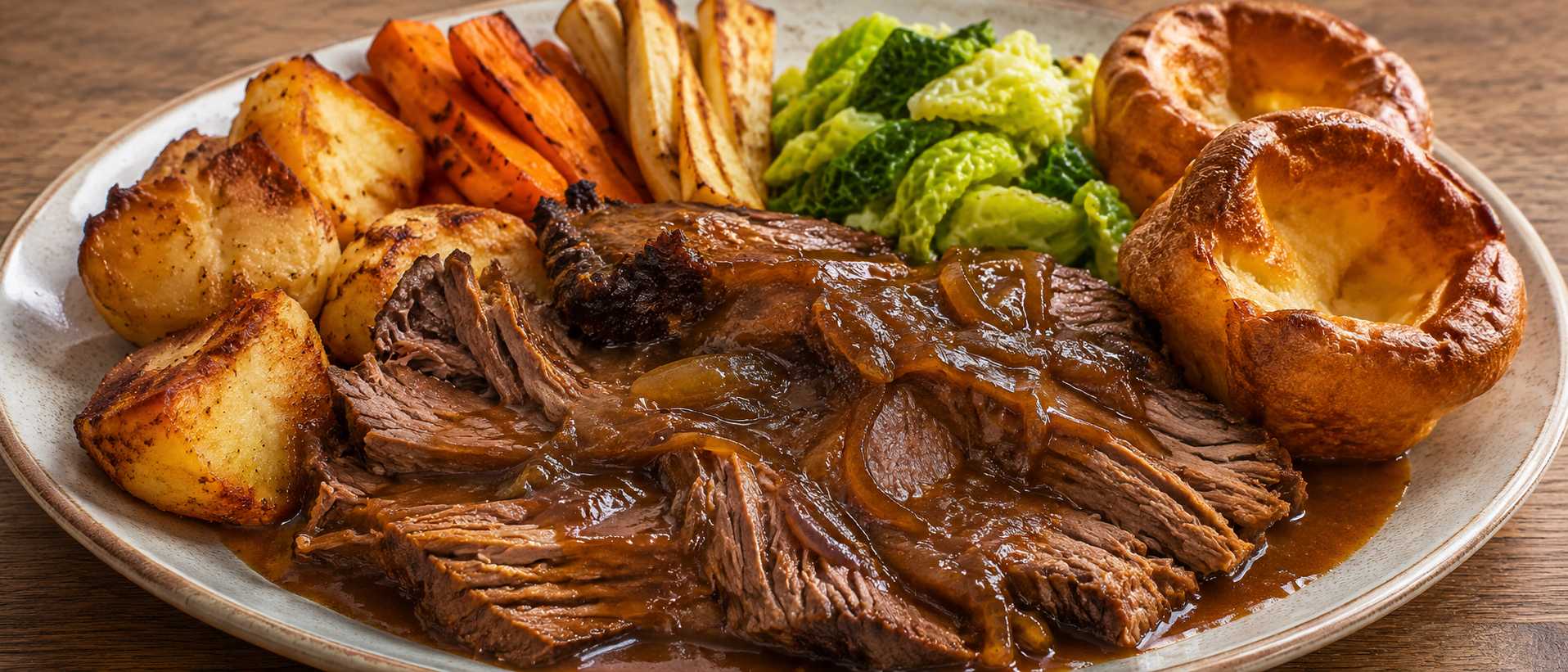
Our step-by-step Sunday roast recipe uses a tightly covered casserole, with a Ninja Foodi pressure-cooker alternative for a shorter cooking day.
For more conventional braising, see Braising Steak: Why Chuck Rewards Slow Cooking. For a completely different dinner, our Texas BBQ Style Chuck Roast and Slow-Cooked Beef Birria show what the same cut can do with smoke or chilli.
Leftover cooked chuck is also good in beef sandwiches with horseradish, cottage pie, a quick beef hash or a simple next-day stew. Cool leftovers promptly and refrigerate.
From the Butchery
Our dry-aged native breed beef chuck roast is prepared for the kind of patient cooking that rewards the Sunday table. Choose a 2-2.5kg or 3-3.5kg joint to suit the number you are feeding.
Do not fight the cut. For a Sunday roast, we favour the tightly covered slow-roast method: good browning, a bed of vegetables, gentle heat and time. It gives chuck the best chance of arriving at the table as richly flavoured beef with proper carving slices and a gravy made from its own juices.