Grid Iron Gourmet
Braising is a two-stage method. Brown the beef properly before adding the liquid,
then cook it gently for long enough that the connective tissue has time to soften.
Trying to hurry either part usually gives you a less satisfying result.
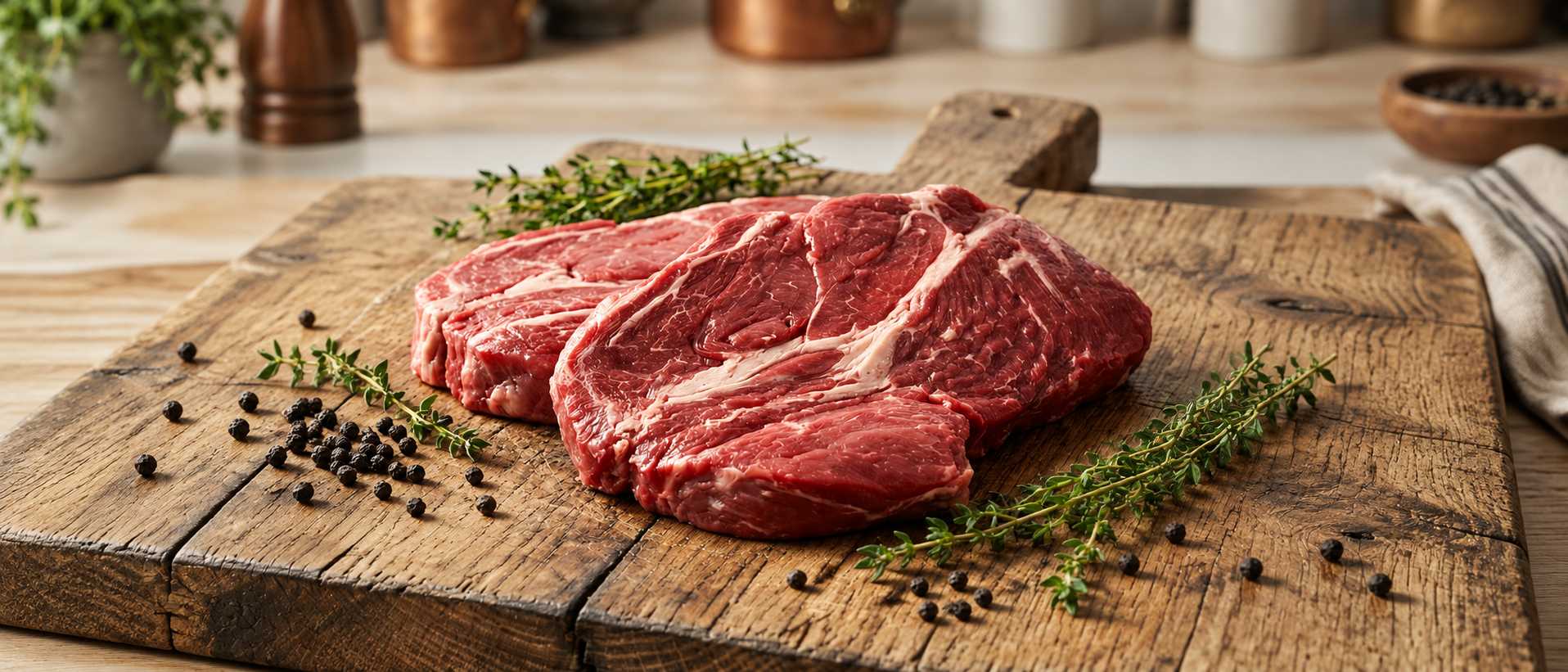
Chuck comes from the shoulder area of the animal. These muscles do more work than the loin cuts
we normally associate with quick-cooking steaks, so the texture starts firmer and contains
more connective tissue.
That isn’t a disadvantage. It is exactly what makes the cut useful for braising.
As it cooks slowly in moisture, the connective tissue softens and the beef develops
the rich, spoon-tender texture you want in a casserole or traditional braised steak.
Pat the steak dry, season it and heat a little beef dripping or oil in a heavy casserole
or frying pan.
Brown the meat in batches rather than crowding the pan. You want good colour on the surface,
not beef sitting in enough released moisture that it begins to steam.
Once the beef is browned, remove it while you soften the onions or other vegetables.
When you add the stock, wine, ale or other braising liquid, scrape up the browned bits
from the base of the pan. They belong in the finished sauce.
For a traditional oven braise, around 160°C fan works well.
Return the browned beef to the casserole with enough liquid to braise rather than completely drown it,
cover and give it roughly 2½–3 hours.
The exact clock time matters less than the texture. The beef is ready when a fork or knife
goes through it with very little resistance. If it still feels tight, it usually needs more time.
More heat is not the shortcut it appears to be.
A hard boil can tighten the meat and reduce the liquid before the chuck has had enough time to soften.
Aim instead for a quiet simmer and a covered casserole.
Towards the end you can remove the lid if the sauce needs reducing or thickening.
Our braising steak comes as one or two substantial slices in a 1kg pack.
You can leave those slices largely intact for traditional braised steak and onions,
where the meat remains recognisable on the plate.
Alternatively, cut it into generous pieces for casseroles, beef bourguignon,
steak-and-ale dishes or stews. Don’t cut everything too small at the start:
larger pieces retain their identity much better over a long cook.
This is a particularly useful cut because the same basic technique can take you in several directions.
The sauce is usually as important as the beef, so accompaniments that make the most of it work particularly well:
Recipe idea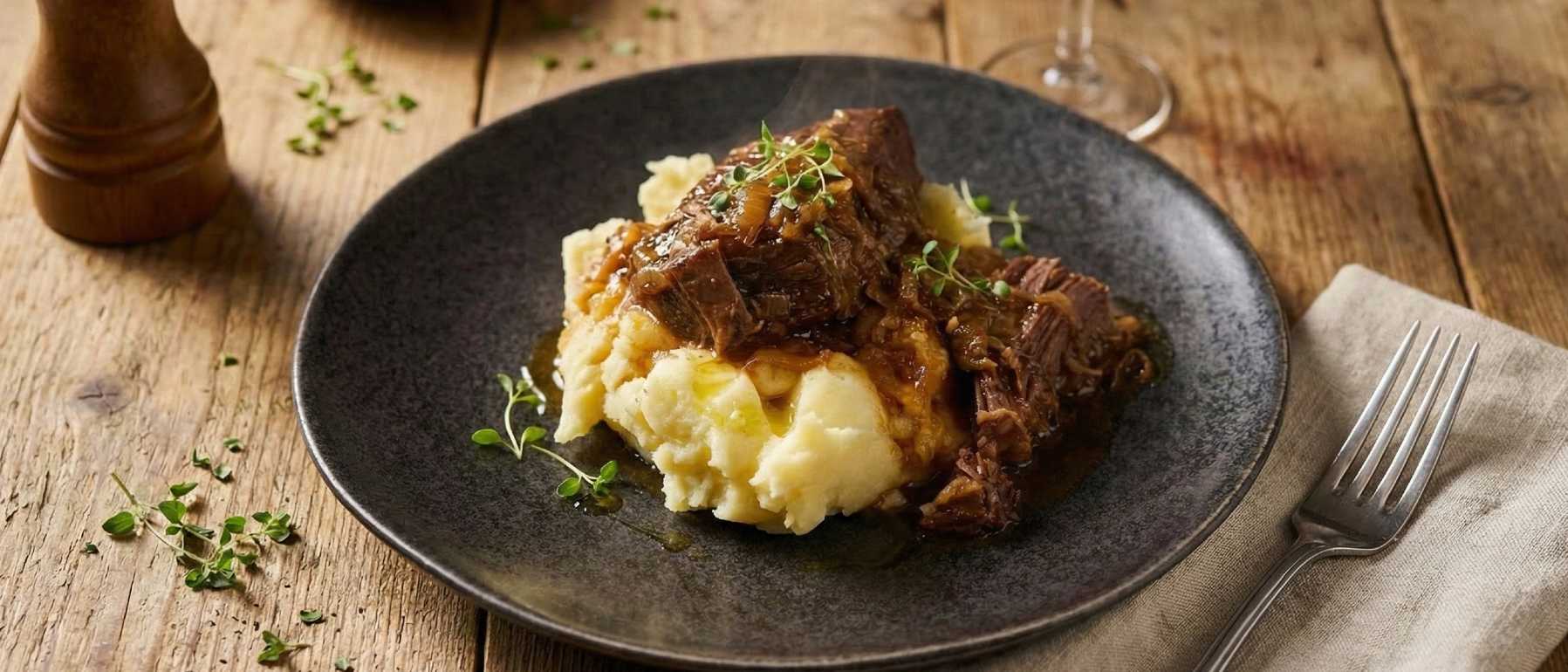
A straightforward traditional braise using thick chuck steak, plenty of onions,
beef stock, thyme and Worcestershire sauce. It is an ideal starting point
if you want to see exactly what this cut can do.
From the Butchery
A 1kg pack of thick-sliced chuck steak made for braising, casseroles and other
long, gentle cooking methods where depth of beef flavour and tenderness matter.
Braising steak is a reminder that tenderness does not always start with an expensive cut.
Choose a hardworking piece of beef, brown it carefully and give it the right cooking method,
and time does most of the difficult work for you.