GRID IRON GOURMET / THE KITCHEN
A whole beef fillet is a magnificent cut: exceptionally tender, lean and large enough to provide a substantial roast or several different meals. Unlike an evenly shaped centre cut, the complete fillet has a broad head, a uniform middle and a naturally tapering tail.
The secret to cooking it evenly is to fold and tie the thinner end, sear the surface thoroughly and judge doneness with a meat thermometer rather than cooking time alone.
Remove the fillet from the refrigerator 60–90 minutes before cooking. This will not bring such a large cut completely to room temperature, but it will take off the deep chill and help it cook more evenly.
Pat the surface thoroughly dry with kitchen paper.
Fold the narrow tail underneath itself until that end is approximately the same thickness as the centre.
Tie the fillet firmly—but not tightly—at intervals of approximately 4–5cm. This creates a more even shape and prevents the thinner end from overcooking before the centre is ready.
The broad head will remain thicker than the rest of the fillet. This is normal.
Preheat the oven to:
Place a roasting tray in the oven to heat.
Rub the fillet lightly with the oil, then season evenly with the salt and plenty of freshly ground black pepper.
If time allows, the fillet can be seasoned and left uncovered in the refrigerator for 12–24 hours. This gives the seasoning time to penetrate and helps produce a drier surface for browning.
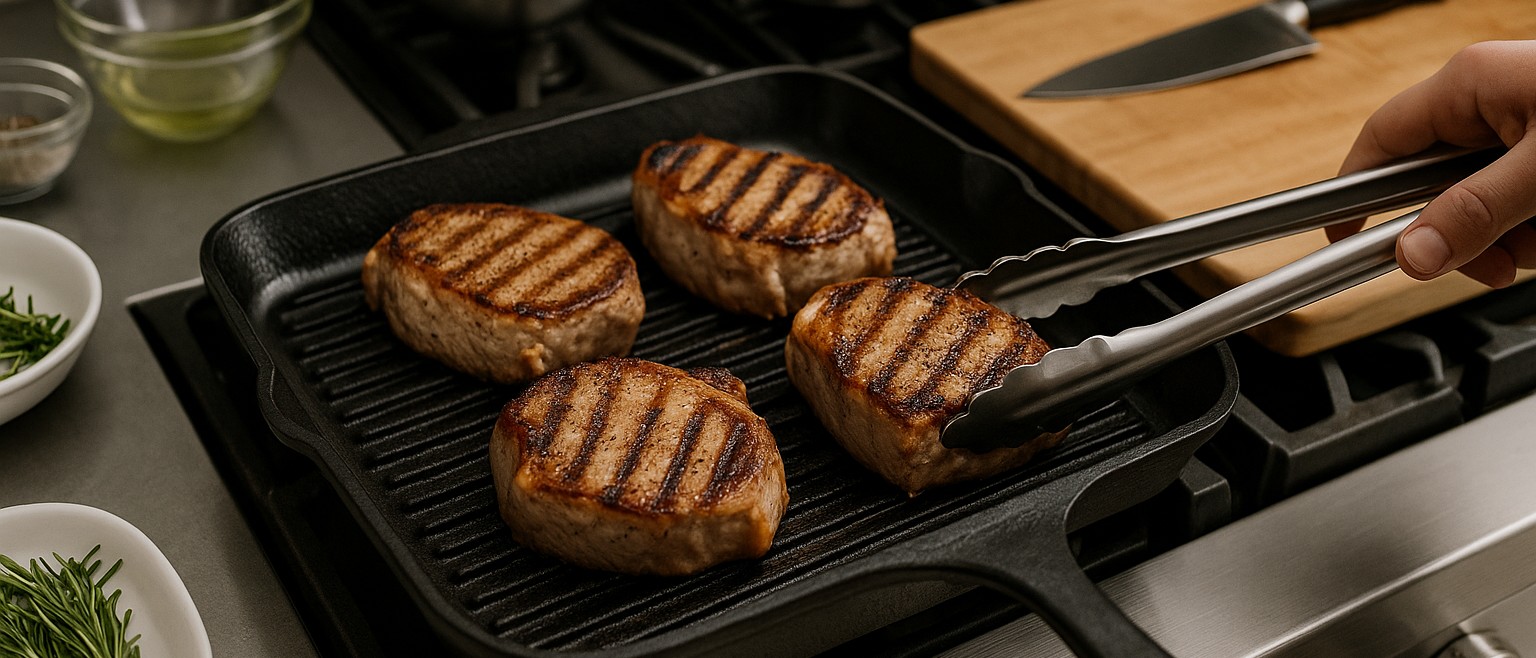
Heat your largest heavy pan or griddle over high heat. If the fillet will not fit comfortably, use a heavy roasting tray across two hob burners.
Sear the fillet for approximately 8–10 minutes in total, turning regularly until it is browned on every side. Pay particular attention to the broad head and any paler areas that have not made full contact with the pan.
Reduce the heat. Add the butter, garlic, thyme and rosemary. Allow the butter to foam, then baste the fillet for 1–2 minutes.
Transfer the fillet to the heated roasting tray and place it in the oven.
Begin checking the internal temperature after approximately 30 minutes. Depending on its exact thickness, starting temperature and your oven, a whole 2.4–2.7kg fillet will generally need around 35–55 minutes after searing.
Insert the thermometer into the thickest part of the centre. Check the broad head separately, as this section may cook slightly more slowly.
Remove the fillet from the oven at:
| Doneness | Remove from oven | Expected temperature after resting |
|---|---|---|
| Rare | 48–50°C | 52–54°C |
| Medium-rare | 52–54°C | 55–57°C |
| Medium | 57–59°C | 60–63°C |
The temperature should rise by approximately 3–5°C as the meat rests.
Transfer the fillet to a warm board or serving platter. Cover it loosely with foil and rest for 25–30 minutes.
Do not wrap it tightly. A tight covering traps steam and softens the browned surface.
Resting is essential with a joint of this size. It allows the temperature to settle and reduces the amount of juice lost when the fillet is carved.
Remove the butcher’s string and carve the fillet across the grain into slices approximately 1.5–2cm thick.
The broad head will give larger slices, while the centre and folded tail will produce smaller, more evenly sized portions.
Spoon over any resting juices before serving.
While the fillet rests, make a quick sauce in the searing pan.
A mature Bordeaux, Cabernet Sauvignon or structured Rioja works well with red wine jus. Pinot Noir suits lighter sauces, while an oaked Chardonnay can work surprisingly well when the fillet is served with béarnaise or a buttery mushroom sauce.
For beer, choose a balanced amber ale rather than an aggressively hopped IPA. A sparkling apple drink, cold-brewed black tea or rosemary and lemon tonic provides a good non-alcoholic alternative.
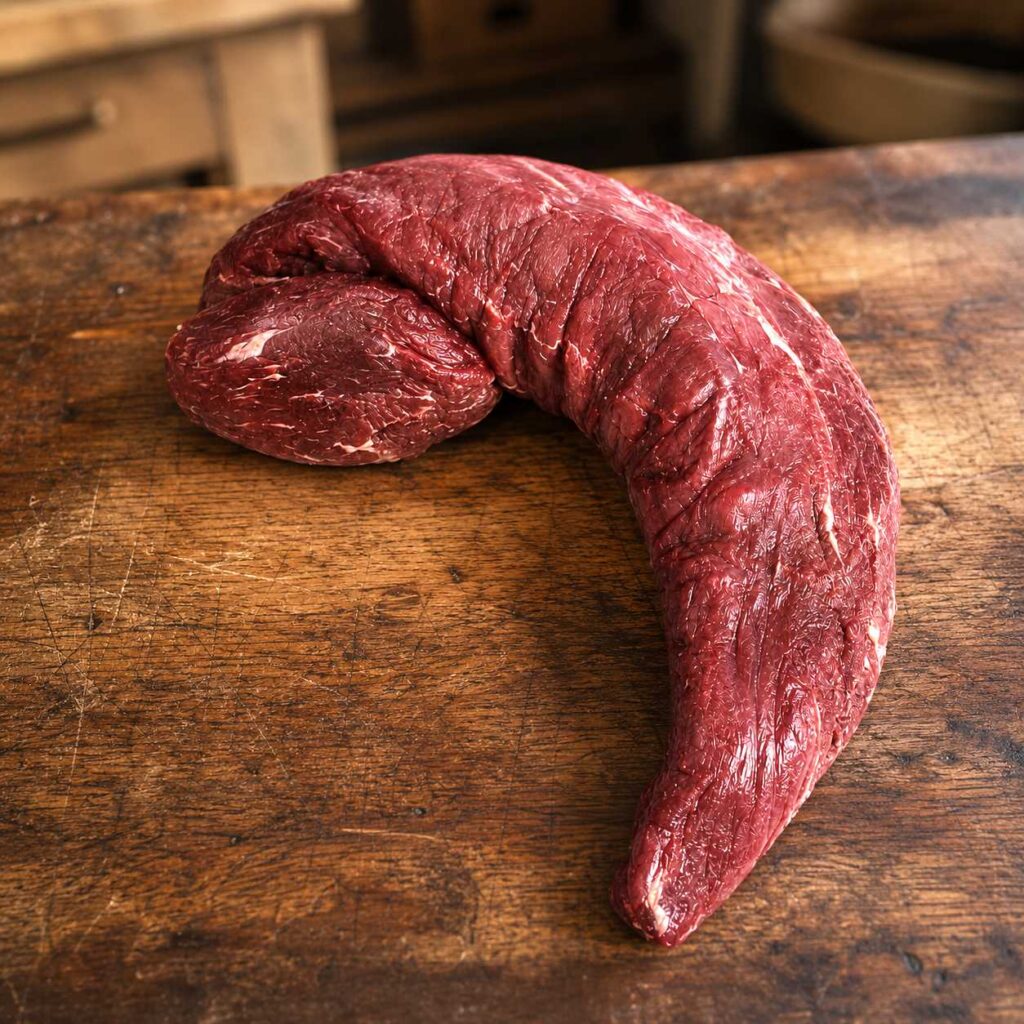
A genuinely complete, fully trimmed native-breed beef fillet, weighing at least 2.4kg. Sourced from North Yorkshire farms and salt-aged for a minimum of 28 days, this is a substantially larger cut than the typical 1.3–1.8kg fillets offered by many online butchers. This impressive cut is ideal for celebrations, Beef Wellington or generous steak portions.
Minimum weight: 2.4kg. Whole fillets typically weigh between 2.4kg and 2.7kg.
£215.00
MORE FROM THE GRID IRON KITCHEN
Find more ideas by ingredient, cooking style or occasion.