Butterflied lamb leg for roasting and barbecuing
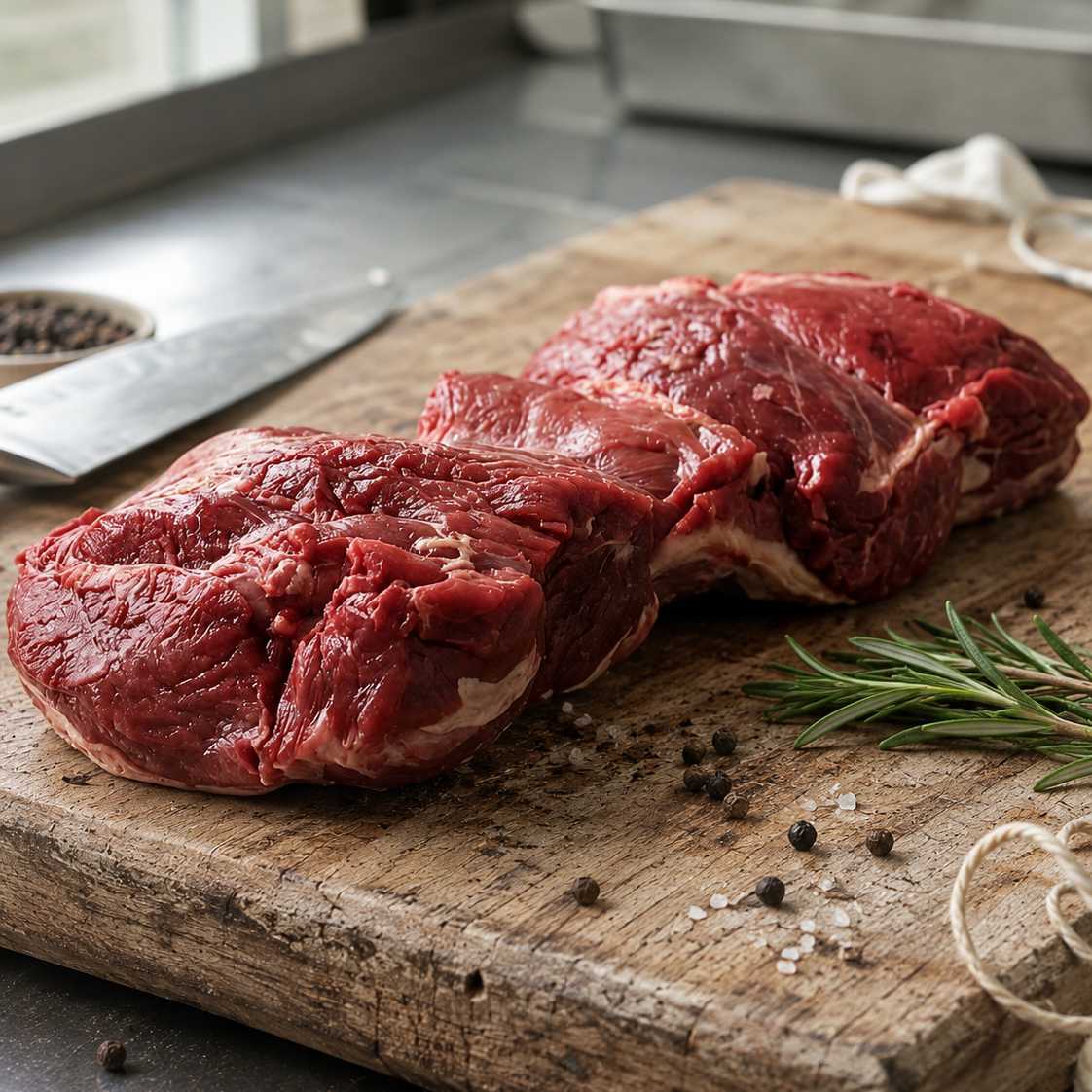
A butterflied lamb leg has the main leg bone removed before the meat is opened into a broad, flatter joint.
This preparation reduces the overall thickness of the meat. It cooks more quickly than a traditional bone-in leg and exposes more surface to seasoning, smoke and direct heat.
The leg contains several different muscles, so the joint will not be perfectly even in thickness. The thinner sections develop plenty of browning and char. The thicker sections can remain pink and juicy.
This makes butterflied lamb leg particularly good for barbecuing. It also works well in a hot oven when you want roast lamb without the longer cooking time of a whole bone-in joint.
Texture and eating quality
Lamb leg is leaner and firmer than lamb shoulder. It produces clean slices rather than soft, pull-apart meat.
Cook it carefully to pink or medium for a juicy result. You can take it further if you prefer your lamb well cooked.
Resting and carving are important. Lamb leg contains several muscles, and the direction of the grain can change across the joint.
Separate the cooked meat into its natural sections where needed. Slice each section thinly across the grain. This shortens the meat fibres and gives a more tender bite.
Why choose a butterflied lamb leg?
Butterflied lamb leg gives you more browned surface than a rolled joint. It also cooks more quickly than a traditional bone-in leg.
Its flatter shape makes it particularly useful for:
- Barbecuing
- Kamado cooking
- Fast oven roasting
- Marinating
- Feeding a gathering
- Serving warm or at room temperature
Compared with a boned and rolled lamb leg, a butterflied leg develops more crust and barbecue char. A rolled leg gives neater, more uniform slices and has a more traditional roasting-joint shape.
Compared with lamb shoulder, leg is leaner and better suited to roasting or grilling. Shoulder contains more connective tissue and benefits from long, slow cooking.
Which size should I choose?
The
approx. 1.3kg butterflied lamb leg should serve around 4–6 people as a main course.
It suits a family roast, a smaller barbecue or a meal where several dishes are being served.
The
approx. 2–2.5kg butterflied lamb leg should serve around 8–12 people.
Choose the larger joint for a gathering, summer barbecue or shared table. The exact number of servings will depend on appetite, side dishes and whether you would like leftovers.
Natural joints vary in shape as well as weight. Use the weight as a serving guide and a meat thermometer to judge when the lamb is cooked.
Seasoning and marinades
Butterflied lamb leg works well with simple seasoning.
Salt, black pepper, garlic, rosemary and lemon are a reliable starting point.
For a Greek-style marinade, use oregano, lemon juice, red wine vinegar, garlic and olive oil.
Cumin, coriander, paprika, harissa or chilli work well for a warmer spice profile.
Marinate the lamb in the fridge for several hours or overnight. Remove any heavy excess marinade before cooking.
Yoghurt, honey and sugar-based marinades can catch over direct heat. Cook the lamb mainly over indirect heat and finish it briefly over the coals.
Serving suggestions
Serve with roast potatoes, seasonal vegetables and mint sauce for a traditional roast.
For a barbecue, try warm flatbreads, chopped salad, grilled vegetables and yoghurt dressing.
Salsa verde, chimichurri or a sharp herb dressing works particularly well with lamb.
Leftovers can be served cold in sandwiches and salads or warmed gently for flatbreads.
Storage and freezing
This product is prepared fresh and packaged ready to freeze.
Keep refrigerated and follow the use-by date shown on the pack.
Freeze as soon as possible if you are not planning to cook it within that period.
Defrost thoroughly in the fridge before cooking. Follow the storage instructions on the product label.
How to cook a butterflied lamb leg
Before cooking
Remove the lamb from the fridge around 30–45 minutes before cooking.
Unfold it fully and pat the surface dry.
Identify the thickest part of the joint. This is where you should check the internal temperature.
Season generously.
When using a marinade, remove any heavy excess before the meat meets direct heat. This is particularly important with yoghurt, honey or sugar-based marinades.
Barbecue or kamado cooking
Set up your barbecue for two-zone cooking.
Place the hot coals or burners on one side. Leave the other side cooler for indirect cooking.
Aim for a lid temperature of around
180–200°C.
Start the lamb over direct heat. Brown it for around 3–5 minutes on each side.
Move it to the indirect side and close the lid.
Turn and reposition the lamb during cooking. Keep the thicker sections closer to the hotter part of the barbecue.
Begin checking the approx. 1.3kg joint after around 20–25 minutes.
Begin checking the approx. 2–2.5kg joint after around 35–40 minutes.
These are checking points rather than fixed cooking times. The shape and thickness of each joint will affect how quickly it cooks.
For yoghurt or sweet marinades, cook mainly over indirect heat. Move the lamb over direct heat near the end to develop colour.
Oven cooking
Preheat the oven to
220°C, 200°C fan or Gas Mark 7.
Place the lamb in a shallow roasting tray with the fattier side facing upwards.
Roast for 15 minutes.
Reduce the oven temperature to
190°C, 170°C fan or Gas Mark 5.
Continue roasting until the thickest part reaches your preferred internal temperature.
Begin checking the approx. 1.3kg joint after around 30 minutes total cooking time.
Begin checking the approx. 2–2.5kg joint after around 45 minutes total cooking time.
Cooking times will vary according to the thickness and shape of the joint.
Internal temperatures
For pink lamb, remove it from the heat at approximately
55–57°C.
For medium lamb, remove it from the heat at approximately
60–62°C.
For fully cooked lamb, cook until the centre reaches
70°C for two minutes, or an equivalent safe time and temperature.
Check more than one thick section. A butterflied leg contains several muscles and may not cook evenly throughout.
Resting and carving
Rest the lamb loosely covered for 15–20 minutes.
Look at the direction of the grain before carving.
Separate the larger muscle sections along their natural seams where helpful.
Slice each section thinly across the grain.