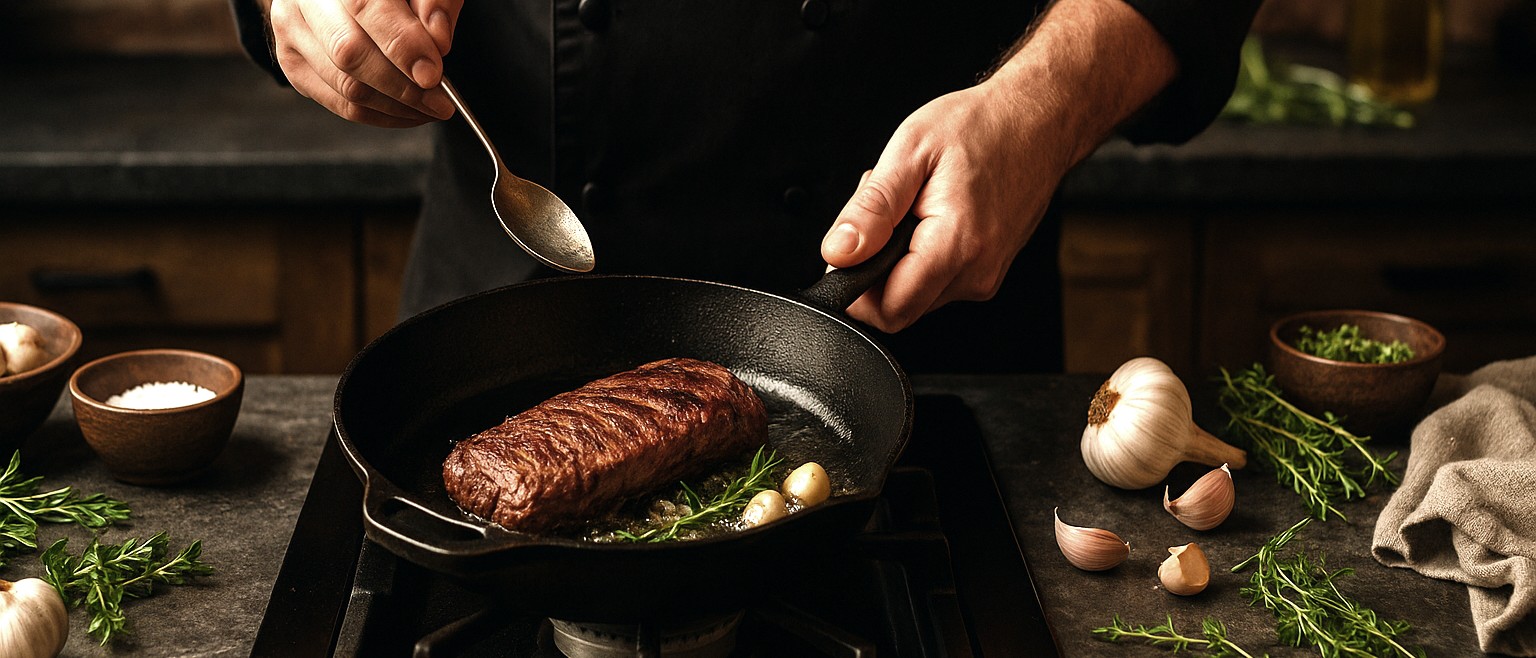
Onglet is one of the most tastiest steak cuts you can cook. Sometimes called hanger steak, it has a loose, open grain and a deep beefy character that works particularly well over high heat.
The key is simple: cook it quickly, keep it rare to medium-rare, let it rest, then slice it thinly across the grain.
Served here with a sharp, herby chimichurri and ripe summer tomatoes, it makes a simple warm-weather supper that puts the flavour of the beef first.
Combine the parsley, oregano, garlic and chilli flakes in a bowl.
Add the red wine vinegar and olive oil, season with salt and black pepper and stir well.
Leave the chimichurri to stand while you prepare the rest of the dish. This gives the garlic, herbs and vinegar time to come together.
Cut the tomatoes into a mixture of wedges, halves and thick slices depending on their size.
Arrange them on a serving plate and scatter over the finely sliced onion or shallot.
Season with salt and pepper, drizzle with the vinegar and olive oil and gently toss.
Leave at room temperature while the steak cooks.
Take the onglet out of the fridge around 30 minutes before cooking.
Pat the surface dry with kitchen paper, rub lightly with olive oil and season generously with salt and black pepper.
If the onglet is particularly long, cut it into two or three pieces to make it easier to handle on the grill.
Heat a barbecue, plancha, cast-iron griddle or heavy frying pan until very hot.
Place the onglet directly onto the hot surface and cook for approximately 3–5 minutes on each side, depending on thickness.
You are looking for a deeply browned exterior while keeping the middle rare to medium-rare.
For a more precise result, aim for an internal temperature of approximately:
Transfer the steak to a warm plate or board and leave it to rest for 8–10 minutes.
Do not skip this stage. Onglet benefits enormously from a proper rest.
Look carefully at the direction of the muscle fibres and slice the steak thinly across the grain.
This is particularly important with onglet and makes a considerable difference to the tenderness of the finished steak.
Scatter the sliced onglet over or alongside the tomato salad.
Spoon over some of the chimichurri and serve the rest at the table.
Finish with a little extra sea salt if needed.
Select Sear/Sauté on the highest setting and allow the cooking pot to become very hot.
Lightly oil and season the onglet, then sear it in batches if necessary so the pan is not overcrowded.
Cook for approximately 3–4 minutes on each side, depending on thickness.
Check the internal temperature and remove the steak at around 52–55°C for rare to medium-rare.
Rest for 8–10 minutes before slicing thinly across the grain.
Serve with the tomato salad and chimichurri as above.
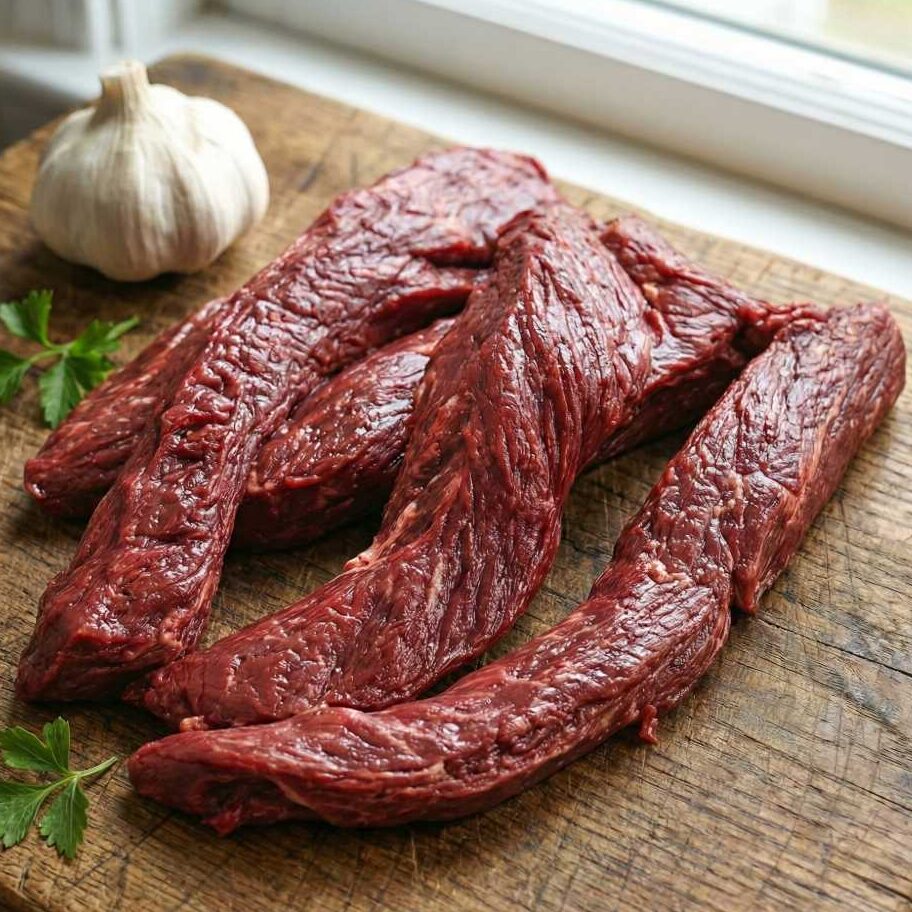
This is a great alternative steak. Cut from the diaphragm area, it has lots of taste and is not dissimilar to offal. Should be cooked rare or medium rare to avoid it becoming tough, but cooked correctly is beautifully tender.
Your steak comes trimmed and ready to cook.
£27.00
Boil small new potatoes until almost tender, then lightly crush and finish them directly on the barbecue or in a hot cast-iron pan with olive oil, garlic and rosemary.
Slice courgettes lengthways, grill until lightly charred and finish with lemon juice, olive oil and torn mint.
Grill whole corn cobs until lightly blackened, then brush with butter mixed with chilli, lime zest and a little sea salt.
Warm flatbreads directly over the grill and use them to wrap slices of onglet with tomato salad and chimichurri.
A simple salad of rocket, chicory or watercress works particularly well against the richness of the beef. Dress with lemon and olive oil.
For something more substantial, crispy roasted new potatoes with plenty of garlic and rosemary make an excellent accompaniment.
Onglet has a pronounced beef flavour, so it works particularly well with ingredients that bring acidity, freshness or savoury depth.
Herbs: parsley, oregano, thyme, rosemary, coriander
Acidity: red wine vinegar, sherry vinegar, lemon, pickled onions
Sauces: chimichurri, romesco, salsa verde, mustard dressing
Vegetables: tomatoes, peppers, courgettes, aubergines, sweetcorn
Spices: black pepper, smoked paprika, chilli flakes, cumin
Other matches: garlic, capers, olives, anchovies, horseradish, blue cheese
Malbec
Dark fruit, soft tannins and enough weight to match the pronounced beef flavour.
Argentine Cabernet Franc
Fresh, herbal and savoury, particularly good with the chimichurri.
Rioja Crianza
Red fruit, gentle oak and enough acidity to work with the tomato salad.
Côtes du Rhône
Peppery, herbal and relatively soft, making it a versatile match for grilled beef.
Oaked Chardonnay
Enough body and texture to stand up to the steak, particularly if served with grilled vegetables.
Viognier
Aromatic and rounded, with enough richness to cope with strongly flavoured beef.
White Rioja
Nutty, savoury and structured, particularly good with charred flavours.
Amber Ale
Malty enough to complement the browned crust of the steak without overwhelming it.
Pale Ale
A little bitterness cuts nicely through the richness of the onglet.
Dry Cider
Sharp, clean and particularly good alongside the tomato and herb elements.
Dark Lager
Toasty and crisp, providing a good bridge between charred beef and fresh salad.
Sparkling Water with Lemon and Mint
Simple, sharp and refreshing alongside the richness of the meat.
Tomato and Celery Shrub
A savoury, acidic drink that echoes the tomato salad.
Iced Black Tea with Lemon
Clean and slightly tannic, making it an excellent partner for grilled beef.
Ginger and Lime Soda
Bright and spicy enough to stand up to the chimichurri.