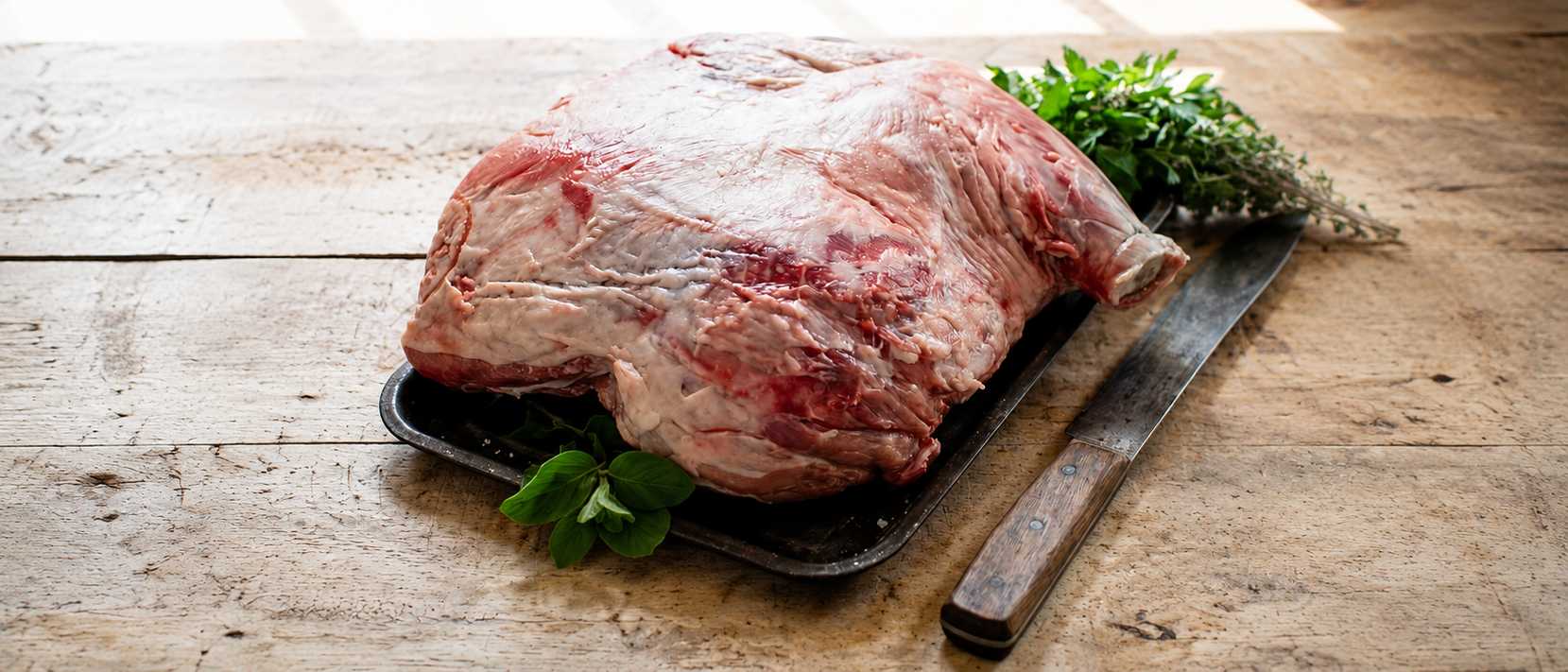
Lamb shoulder is familiar to most people, but mutton shoulder is something else again. Because the animal is older, the meat has a more developed flavour and a firmer, more satisfying texture. That makes it especially well suited to long, gentle cooking, whether you are planning a traditional roast, a covered braise, a rich curry or a proper low-and-slow weekend cook.
Grid Iron Gourmet
It is also one of those cuts that feels practical as well as rewarding. A whole shoulder can feed a crowd,
while a half shoulder gives you the same character and cooking satisfaction in a more manageable size.
Shoulder is naturally a hard-working part of the animal, which means plenty of connective tissue, good internal fat
and a texture that transforms beautifully when cooked slowly. Done quickly, it can feel firm. Given time, it becomes
tender, rich and deeply satisfying.
That is exactly why mutton shoulder shines. Mature sheep produce meat with more flavour than lamb,
and shoulder is the cut that turns that maturity into something especially useful in the kitchen.
The useful thing about mutton shoulder is that you can choose the version that suits the way you cook and the number
of people you are feeding.
The full joint for a proper slow roast or generous gathering. This is the choice when you want a traditional centrepiece
with plenty of flavour and the sort of leftovers that become tomorrow’s curry, shepherd’s pie or pulled mutton.
The featured joint this week. The blade end gives you classic shoulder character in a more manageable size,
making it ideal for a smaller roast, a braise, or a slow cook where you still want the depth that mutton brings.
Another excellent smaller shoulder option, ideal if you want the same mature flavour and slow-cooking quality
in a different section of the joint. A good choice for anyone who enjoys shoulder but does not need a full-sized roast.
The easiest answer is flavour. Lamb is delicate and mild. Mutton is deeper, more savoury and more distinctive.
That is exactly why people who enjoy proper slow cooking often become very loyal to it.
It is not simply “stronger lamb”. It has more character, which means it stands up beautifully to longer cooking,
robust herbs, spice-led dishes and richer accompaniments. If lamb shoulder is comforting, mutton shoulder is comforting
with extra substance and a little more old-fashioned depth.
The key is not complication, but patience. Mutton shoulder likes long, gentle cooking.
A covered slow roast or braise is often the best place to start.
One of the pleasures of this cut is how versatile it is once you understand what it wants from the cook.
Shop the featured joint
A beautifully flavoursome slow-cooking joint and one of the best ways to experience Yorkshire mutton.
This week it is on offer and makes an excellent starting point if you want all the depth of mutton shoulder
in a manageable size.
Recipe idea
If you want to explore what makes mutton so rewarding, a proper curry is one of the best places to start.
The richer flavour of mature sheep stands up beautifully to spice and long cooking.
Mutton shoulder is not a fashionable cut in the modern sense, and that is part of its appeal.
It belongs to the older, slower, more rewarding kind of cooking that gives you something genuinely satisfying at the end.
If you have never tried it, this week’s blade-end shoulder is an excellent place to begin.