Grid Iron Gourmet
Mutton shoulder is a cut that rewards patience. It has a deeper, more developed flavour than lamb and comes from a hard-working part of the animal, so a long, gentle cook gives the shoulder time to soften and become rich and yielding.
This is not a joint to hurry. Keep the seasoning straightforward, give it steady heat, and judge the finish by tenderness rather than by the clock alone.
Slow cooking gives the shoulder’s connective tissue time to soften. The result is fuller flavour and meat that becomes tender enough to carve easily or, if taken further, pull apart with forks.
Shoulder does more work than the loin or rack, so its structure is different. Instead of treating that as a disadvantage, slow cooking uses it to the cut’s benefit. Gentle heat and time soften the tougher fibres and allow the joint to become succulent.
That makes shoulder especially well suited to a relaxed roast, braise or covered cook where tenderness matters more than a precise finish time.
The cooking principle is similar, but the eating experience is different. Mutton comes from a more mature animal, so the flavour is deeper and more developed than lamb.
That fuller character works well with simple roast flavours such as garlic and rosemary, but it also stands up comfortably to cumin, coriander, mint, harissa and other warming spices.
There is no need to make the preparation complicated. The cut already brings plenty of character of its own.
A fixed time can only ever be a guide because joints vary in size and shape. Test the meat as it cooks. When the shoulder is ready, a skewer or knife should meet little resistance and the meat should feel yielding rather than tight.
For a traditional roast, stop once the meat is tender enough to carve comfortably, then let it rest before serving.
If you prefer a softer, pulled finish, continue the cook until the meat separates easily with forks. Shoulder is particularly forgiving when cooked this way.
For a classic autumn roast, pair it with roast potatoes, carrots, parsnips, braised red cabbage and a gravy made from the roasting juices.
For something less traditional, the deeper flavour of mutton works well with spiced vegetables, couscous, flatbreads or a sauce built around garlic, herbs and a little acidity.
Grid Iron Gourmet Guide
If you are choosing between mutton shoulder and leg, our mutton leg guide explains how the two cuts suit different styles of roasting and serving.
Mutton shoulder is worth cooking generously. Leftover meat can be folded into shepherd’s pie, warmed through a curry, added to flatbreads or stirred into a rich next-day stew.
From the Butchery

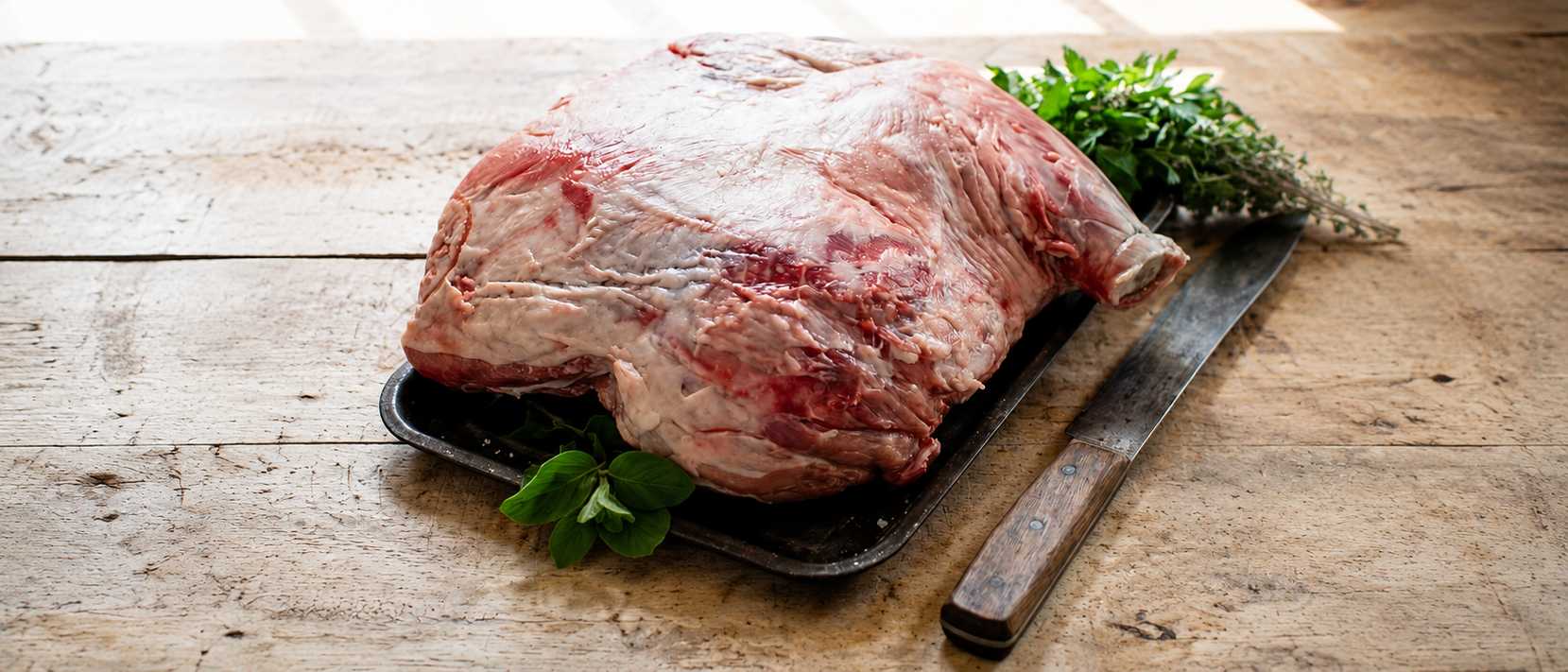
A substantial 1.75-2kg mutton shoulder joint for slow roasting or braising, serving around four. A good choice when you want the deeper flavour of mutton in a manageable roasting joint.
Mutton shoulder is a good example of a cut that makes more sense when you work with its structure rather than against it. Give it time, keep the seasoning honest, and let a long, gentle cook bring out the depth of flavour that makes mutton distinct from lamb.