THE SHORT VERSION
Flat Iron gives you plenty of beef flavour, good tenderness and excellent versatility without needing to move straight to the traditional premium steak cuts.
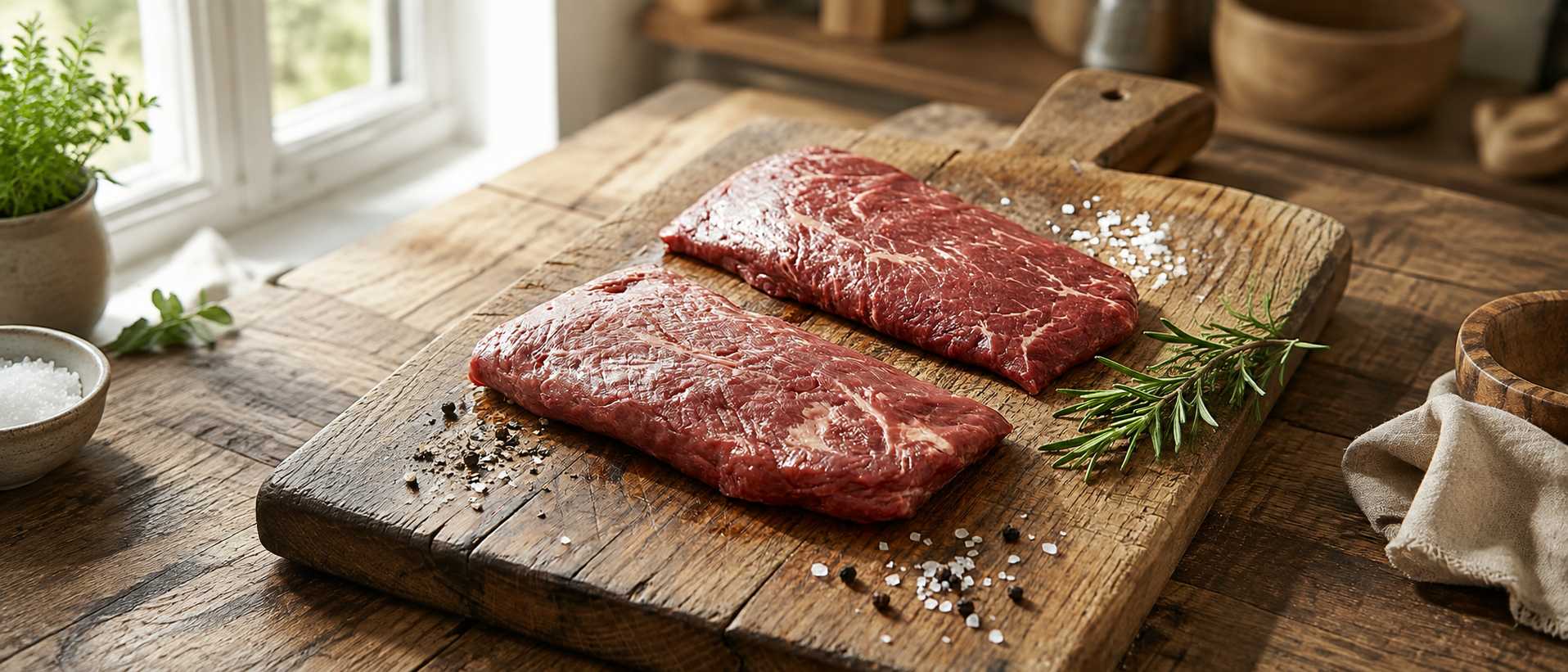
Flat Iron is cut from the featherblade, which sits within the shoulder.
The muscle contains a tough line of connective tissue running through it. Traditionally that made the whole piece better suited to slower cooking, but modern seam butchery allows that central tissue to be removed.
What remains on either side can then be prepared as Flat Iron steaks.
That explains the slightly unusual combination that makes the cut so interesting: the flavour of the shoulder with the tenderness of a steak designed for quick cooking.
Flat Iron has a noticeably beefy flavour. Compared with fillet it has considerably more character; compared with ribeye it is generally leaner and less rich.
It sits somewhere between the familiar prime steaks and cuts such as bavette, onglet and skirt.
It is also fine-grained and relatively even in shape, which makes it straightforward to cook and particularly good when the finished steak is rested and sliced before serving.
Flat Iron likes high heat and relatively short cooking.
A heavy frying pan or cast-iron skillet is ideal, as is a plancha, hot grill or barbecue.
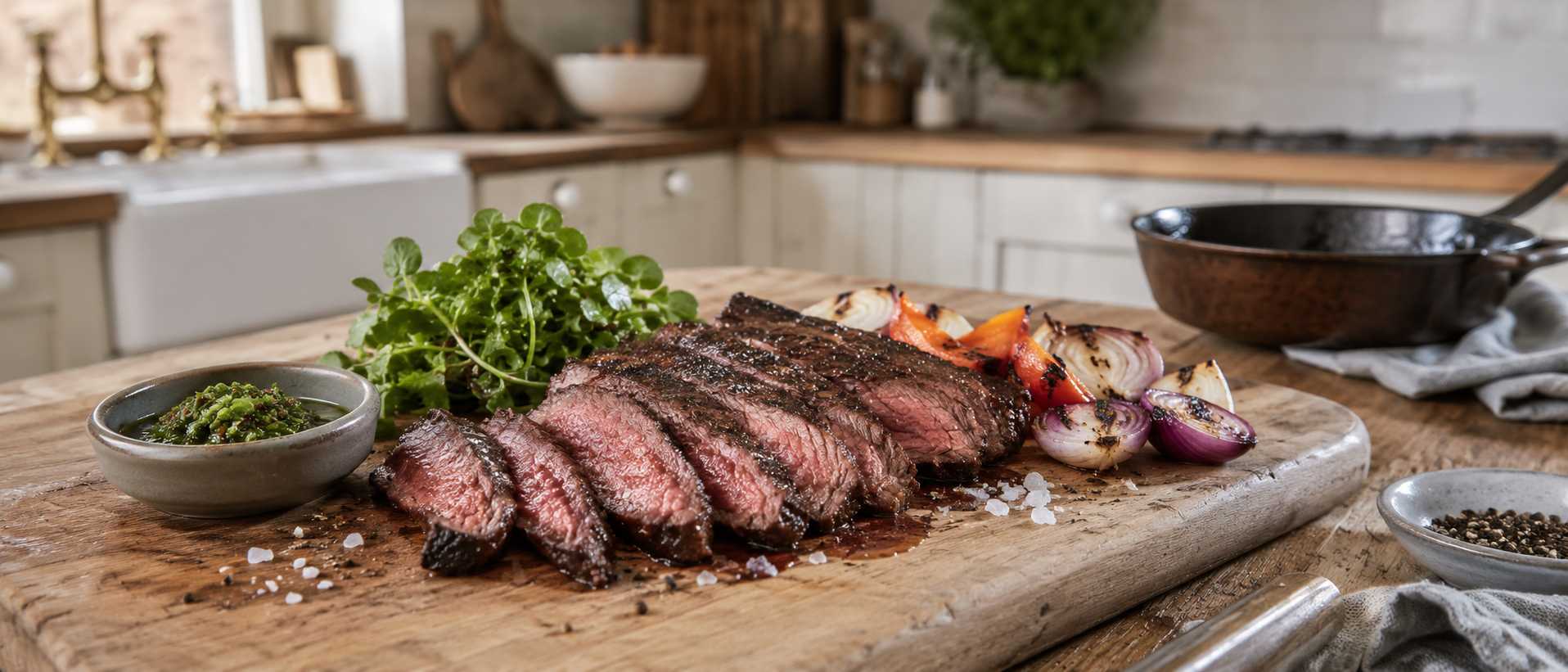
For medium-rare, aim for an internal temperature of around 54–57°C.
Rest for around 5–8 minutes after cooking.
Most importantly, slice across the grain before serving.
Flat Iron is a steak where taking it too far can undo much of what makes the cut special.
We prefer it rare to medium-rare, with medium about as far as we would normally take it. As the internal temperature rises further, the meat becomes noticeably firmer and can begin to dry.
If you’re unsure, a meat thermometer is much more reliable than trying to judge the steak from cooking time alone.
One of the simplest ways to improve a Flat Iron steak is to look at it before you cut it.
The muscle fibres run in a visible direction along the steak. Instead of cutting in the same direction, turn the steak and slice across those fibres.
This shortens the muscle fibres in each mouthful and makes the steak considerably easier to eat.
It’s one reason Flat Iron works especially well brought to the table already rested and sliced on a board.
ONE TECHNIQUE TO REMEMBER
If you remember only one thing about Flat Iron, make it this: cook it hot, keep it pink, rest it well and slice it across the grain.
The beef has enough flavour to cope with assertive sauces and accompaniments.
Chimichurri — parsley, garlic, chilli and vinegar give freshness and acidity.
Salsa verde — herbs, capers and vinegar work particularly well with a simply grilled steak.
Peppercorn sauce — for a more traditional steak supper.
Béarnaise — buttery richness balanced with tarragon and acidity.
Tomato and shallot salad — particularly good when the steak comes off the barbecue.
Mushrooms and crispy potatoes — simple, familiar and very difficult to improve upon.
Flat Iron is especially useful when you want cooked beef that can be sliced and shared rather than served as individual steaks.
Try it in:
Cook the steak whole first, allow it to rest, then slice it just before adding it to the finished dish.
Flat Iron doesn’t rely on the reputation of a famous steak name.
Its appeal is much simpler: it eats extremely well.
You get the depth of flavour that comes from the shoulder, a surprisingly tender texture when it’s properly butchered and cooked, and a steak that works equally well for a quick midweek supper or something cooked outside over charcoal.
If your usual choice is sirloin or ribeye, Flat Iron is a very good place to start exploring the less familiar butcher’s cuts.
Our native breed Flat Iron steaks are cut from the featherblade and prepared for quick, high-heat cooking. Deep beef flavour, fine texture and a cut that’s particularly good served pink and sliced across the grain.
Flat Iron is included in this week’s offers.
Explore recipes for Flat Iron, bavette, onglet, skirt and other butcher’s cuts, with ideas for cooking them quickly, serving them simply and making the most of their deeper beef flavour.