Grid Iron Gourmet
Topside is a classic roasting joint. It is leaner and more finely grained than rib cuts, so the way you handle it after cooking matters just as much as the roasting itself.
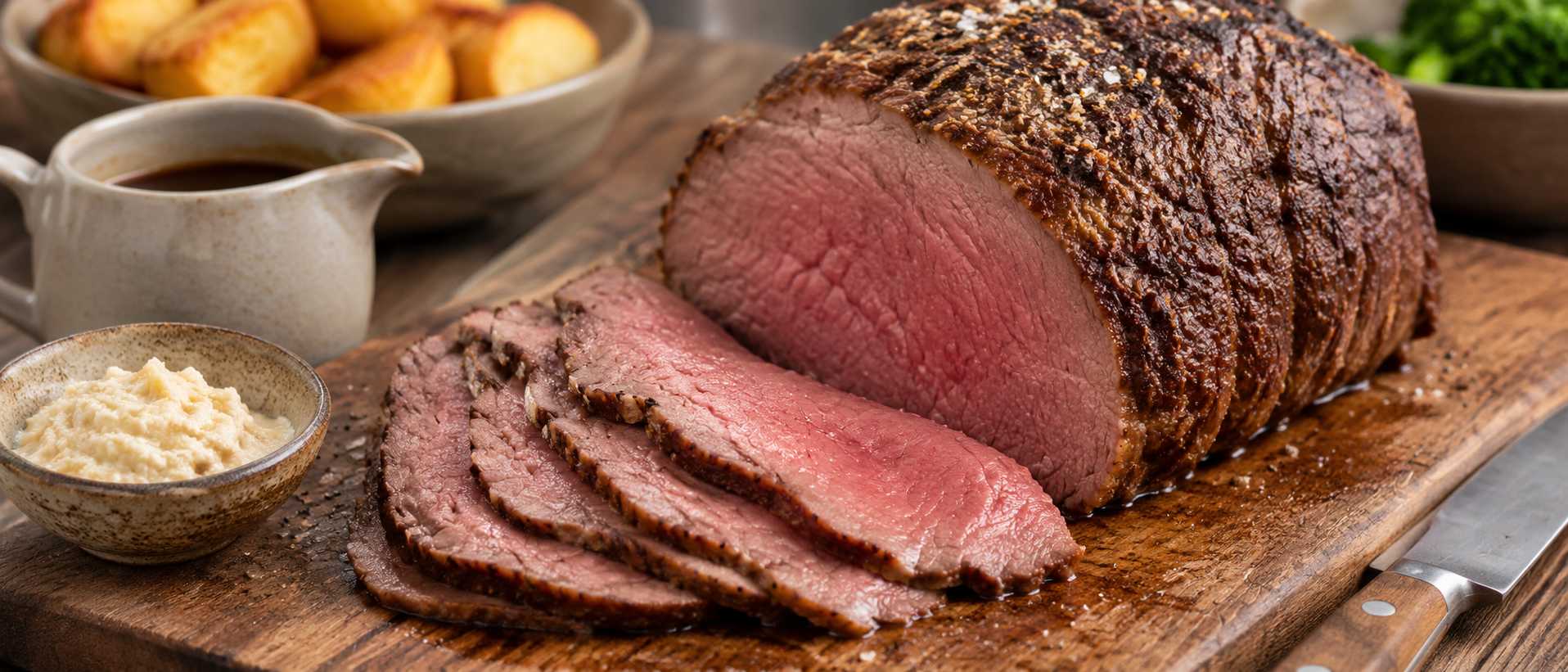
Give it enough rest, carve it thinly across the grain and you get neat slices that work well for a Sunday roast, a larger family table and cold beef the next day.
Topside has a distinct grain. Rest the joint properly, then slice across that grain rather than along it. Thin slices shorten the fibres in each mouthful and suit this cut far better than thick carving.
Topside comes from the hindquarter and makes a straightforward carving roast. It does not need elaborate preparation: careful roasting, a proper rest and good carving do most of the work.
It is a particularly useful choice when you want roast beef for the table without the bone and richness of a fore rib. It also gives you tidy cold slices for sandwiches and leftovers once safely chilled.
Season the joint simply and roast it to the degree of doneness you prefer. A meat thermometer is more reliable than trying to judge a large joint by time alone, particularly because joint size and starting temperature can vary.
Carving immediately after roasting works against you. Give the joint time to rest somewhere warm before you cut it. This helps the temperature settle and gives you cleaner slices with less juice running onto the board.
Topside is useful because you can choose a joint to suit the table. A smaller joint works for a family meal, while a larger one gives you more room for entertaining and planned leftovers.
When choosing a size, think about appetite, side dishes and whether you want cold beef for the next day rather than relying on a rigid serving number.
This is roast beef at its most familiar. Roast potatoes, Yorkshire puddings, seasonal vegetables, gravy and horseradish all work naturally with it. Keep the accompaniments simple and let the beef remain the centre of the meal.
Grid Iron Gourmet Guide
Our existing Topside cooking guide looks at roasting and alternative cooking methods for this lean hindquarter cut.
One of the pleasures of a topside roast is what happens the next day. Once properly cooled and chilled, thin slices work particularly well in sandwiches, with mustard or horseradish, or alongside pickles and salad.
From the Butchery

A traditional native-breed beef roasting joint prepared for easy carving, available in several sizes for family roasts, larger gatherings and planned leftovers.
Topside rewards straightforward cooking. Roast it carefully, let it rest, then carve it thinly across the grain. The result is a traditional beef joint that works just as well for the Sunday table as it does for cold slices the next day.