
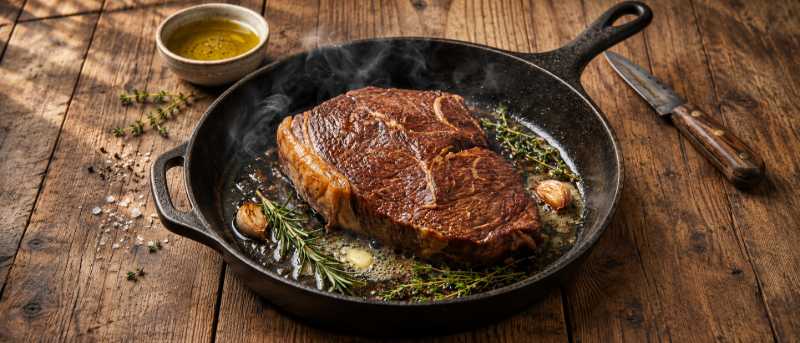
Grid Iron Gourmet
A thick-cut rump sharing steak is a different proposition from two smaller steaks. Cooked as one substantial piece, it gives you time to build a good crust while keeping much better control of the centre.
Rump has plenty of beef character and a firmer texture than ribeye or fillet. That makes the final steps especially important: cook it to temperature, rest it properly, then carve across the grain before serving.
A thick steak gives the outside time to brown properly before the centre is overcooked. Sear it hard for colour, then finish it more gently in the oven. The result is one steak with a well-developed crust and an even centre, ready to rest and carve for the table.
Rump comes from the back end of the animal and does more work than the very tender loin cuts. It has a more pronounced texture and a strong beef flavour, which makes it particularly satisfying when cooked as a substantial steak rather than cut too thinly.
Cooking one large steak also makes serving simpler. Instead of trying to time two steaks separately, you cook one piece, rest it once, then slice it for the table.
The aim is to get plenty of colour on the outside without losing control of the centre. A heavy pan and a meat thermometer make the job much easier.
For medium-rare, aim for around 54C in the centre. For medium, around 60C is a useful guide. Because the steak will continue to warm slightly as it rests, take the reading before you carve rather than cooking until the meat looks done from the outside.
A thick steak holds a lot of heat. Resting gives the temperature time to settle through the meat and helps keep more of the juices in the steak rather than on the carving board.
Five to ten minutes is usually enough for a steak of this size. Keep it somewhere warm, but do not wrap it so tightly that the crust steams and softens.
Rump has a more obvious grain than fillet or ribeye, so carving direction matters. Look at the muscle fibres before you start slicing and cut across them rather than along them.
That shortens the fibres in each slice and makes the steak noticeably easier to eat. Slice it reasonably thinly, arrange it on a warm plate or board, and let everyone help themselves.
Keep the rest of the plate fairly simple. Chips, roast potatoes, mushrooms, a green salad or wilted greens all work well. A peppercorn sauce, red wine sauce or chimichurri will stand up to the stronger flavour of rump without overwhelming it.
Grid Iron Gourmet Guide
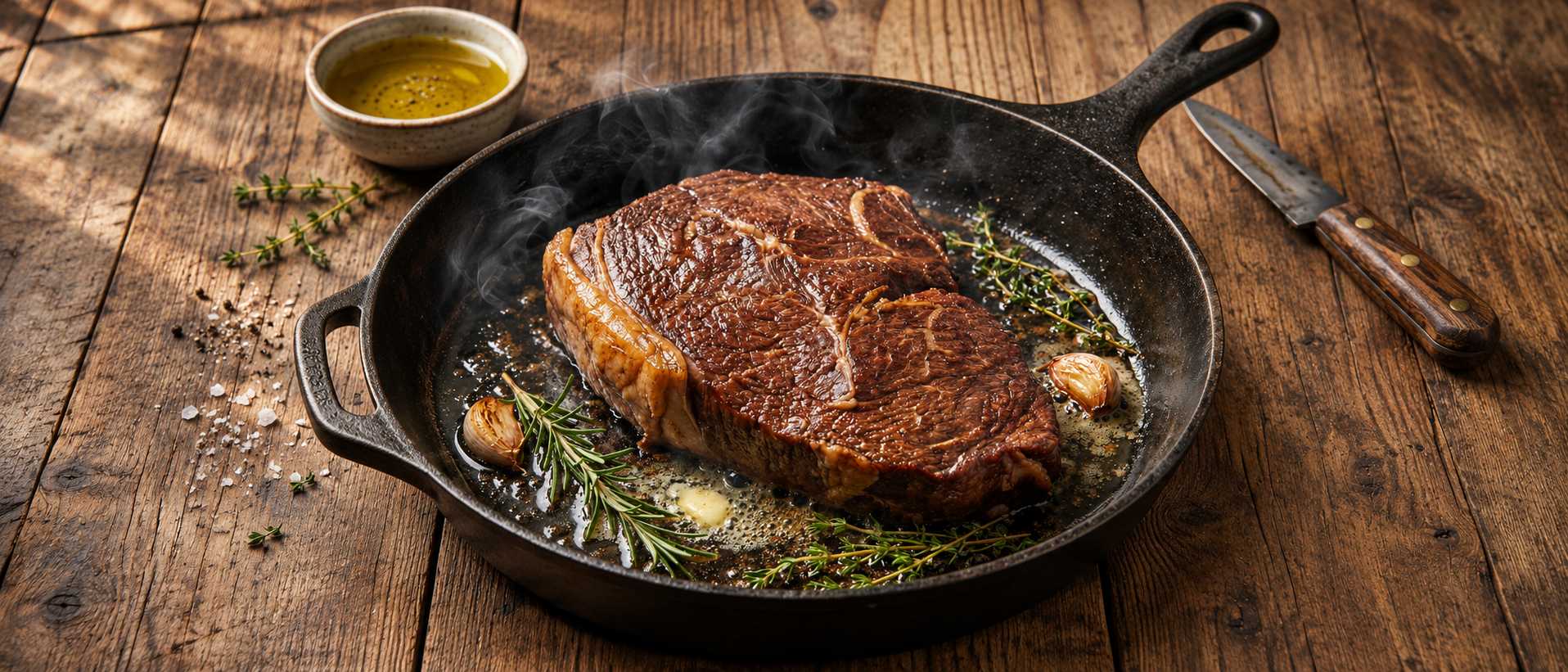
Our step-by-step guide covers the same sear-and-finish method, temperature targets, resting and carving for this particular style of steak.
The appeal of a sharing steak is partly practical. You can concentrate on cooking one piece well, then bring it to the table already rested and sliced. It turns a straightforward rump steak into a centrepiece without making the cooking more complicated.
From the Butchery

A substantial rump steak of around 800g, cut thick for cooking whole, resting and carving at the table. A generous steak for one or an easy sharing steak for two.
Thick-cut rump works best when you treat it as one substantial steak rather than two smaller ones joined together. Build the crust, finish the centre gently, use temperature to guide you, rest it properly and carve across the grain. Those few details make a much bigger difference than adding complexity to the seasoning.