Grid Iron Gourmet
A T-bone is an unusual steak because the bone separates two distinct muscles. You get the beef character of sirloin alongside the finer texture of fillet, without having to choose between them.
The trick is to cook both sides with care. A little attention to where the heat comes from makes a greater difference than elaborate seasoning.
Keep the smaller fillet away from the fiercest heat as the steak finishes. Check the two sides separately rather than assuming the whole steak is ready at the same time.
Cut across the loin, a T-bone has sirloin on the larger side of the bone and fillet on the smaller side. Sirloin has a satisfying beef flavour and a little more bite, while fillet is naturally tender and lean.
The size of the fillet depends on where the butcher cuts along the loin. A porterhouse generally has a larger fillet section. Both cuts give you two different eating qualities in one steak.
The smaller, leaner fillet can reach your preferred doneness before the larger sirloin. Treating the whole steak as though it were one uniform piece makes it easy to overcook the fillet while waiting for the sirloin.
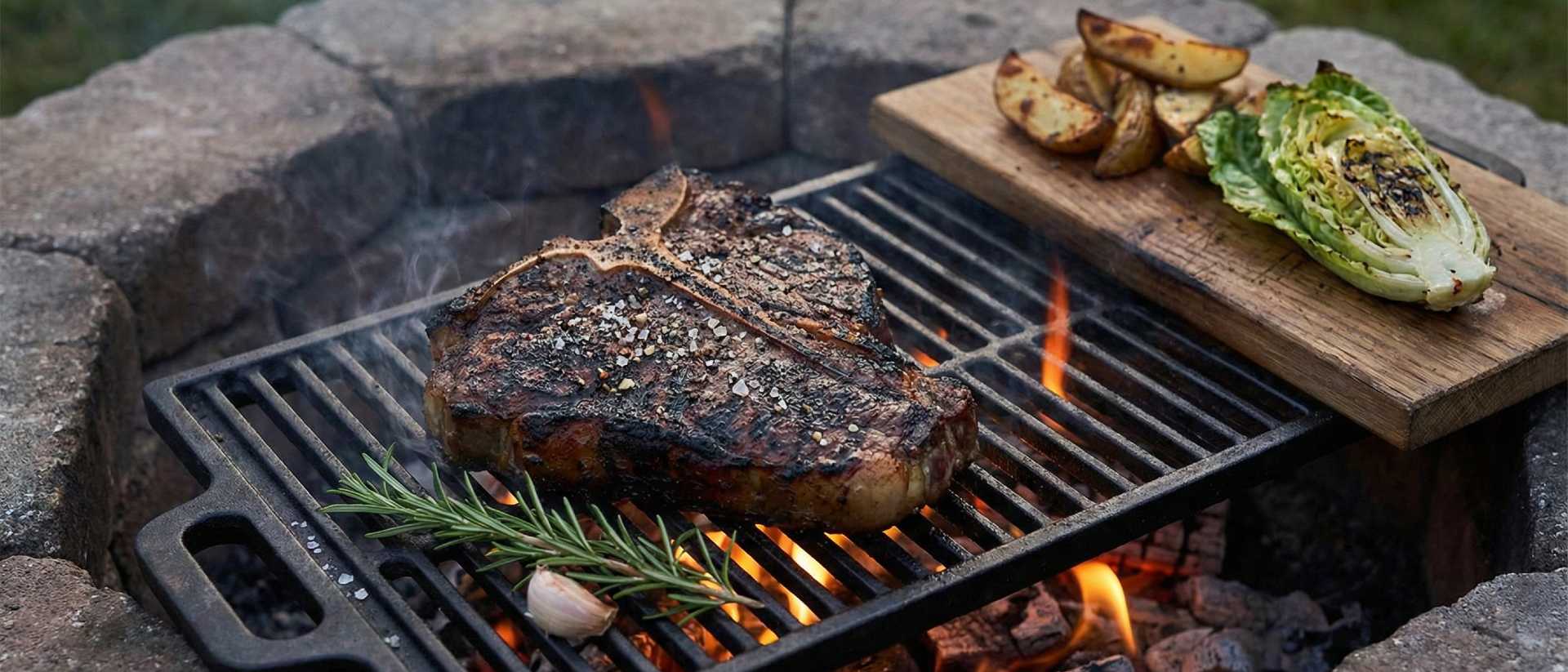
On a barbecue, position the sirloin towards the hotter area and the fillet towards the cooler edge. In the kitchen, use the hot pan to build colour, then reduce the heat or finish a thick steak in the oven.
A smaller T-bone makes a substantial individual steak. A heavier one may give you more room to build a crust and control the centre, provided it is cut thicker. Remember that the stated weight includes the bone.
Our British native-breed T-bones are dry aged on the bone for at least 28 days. Their natural fat cover and fillet proportions vary, so look at the shape and thickness of the steak before deciding how to cook it.
A heavy frying pan or cast iron skillet works well. Adjust the finishing method to the actual thickness of your steak.
A thermometer reading from the larger muscle tells you little about the smaller fillet. Check both. If the fillet is cooking more quickly, turn that side towards a cooler part of the pan or grill. Avoid relying on fixed minutes per side.
Recipe idea
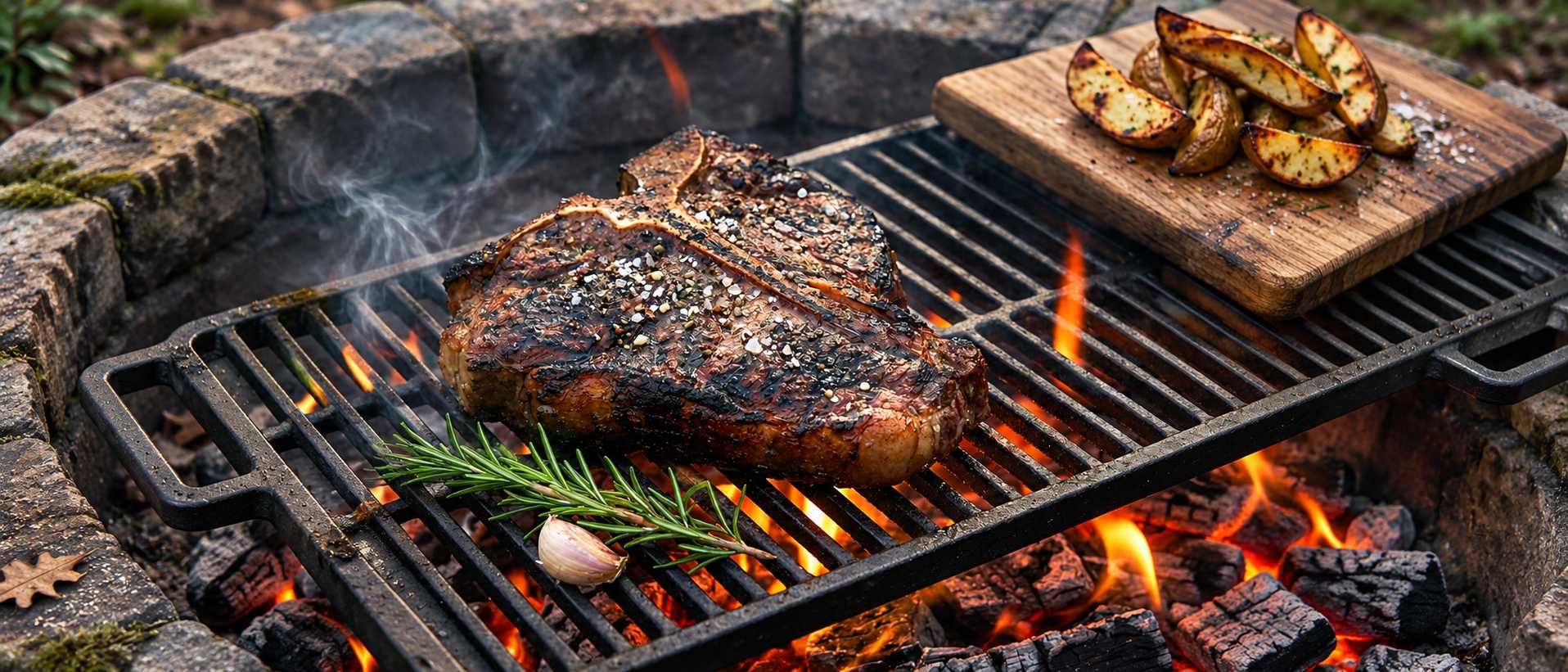
For a larger, thick-cut steak cooked over embers, our open-fire recipe offers a different way to put the same principles into practice. Adjust cooking to the thickness of your steak.
After resting, run a sharp knife along either side of the bone to release the sirloin and fillet. Slice each across its grain and serve together, so everyone can taste the difference. Chips, mushrooms, greens or a spoonful of mustard butter are all good partners.
From the Butchery
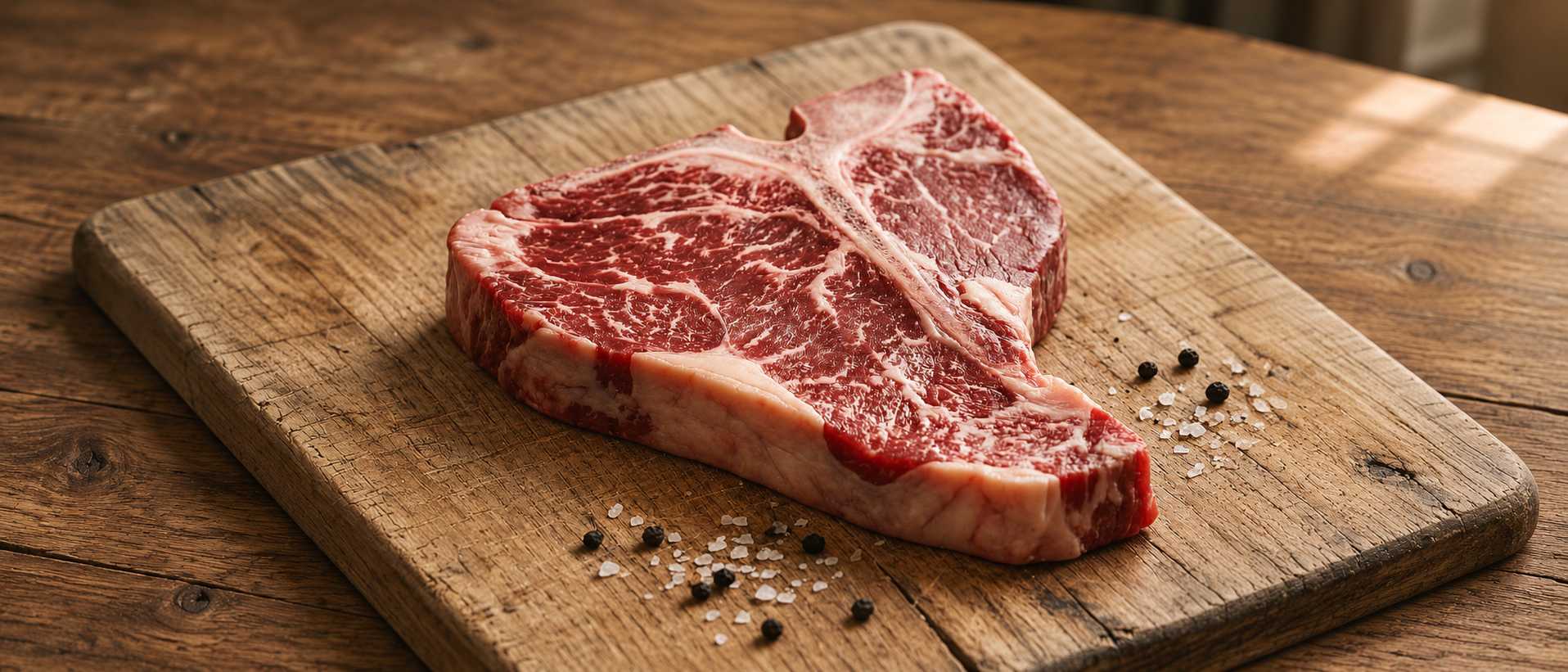
British native-breed beef, dry aged on the bone for at least 28 days. Choose from the 12oz, 14oz and 18oz steaks on our main T-bone product page.
Choose the steak for the meal you want to cook. Give the sirloin and fillet the attention they each need, rest before carving and enjoy the difference between the two cuts.