
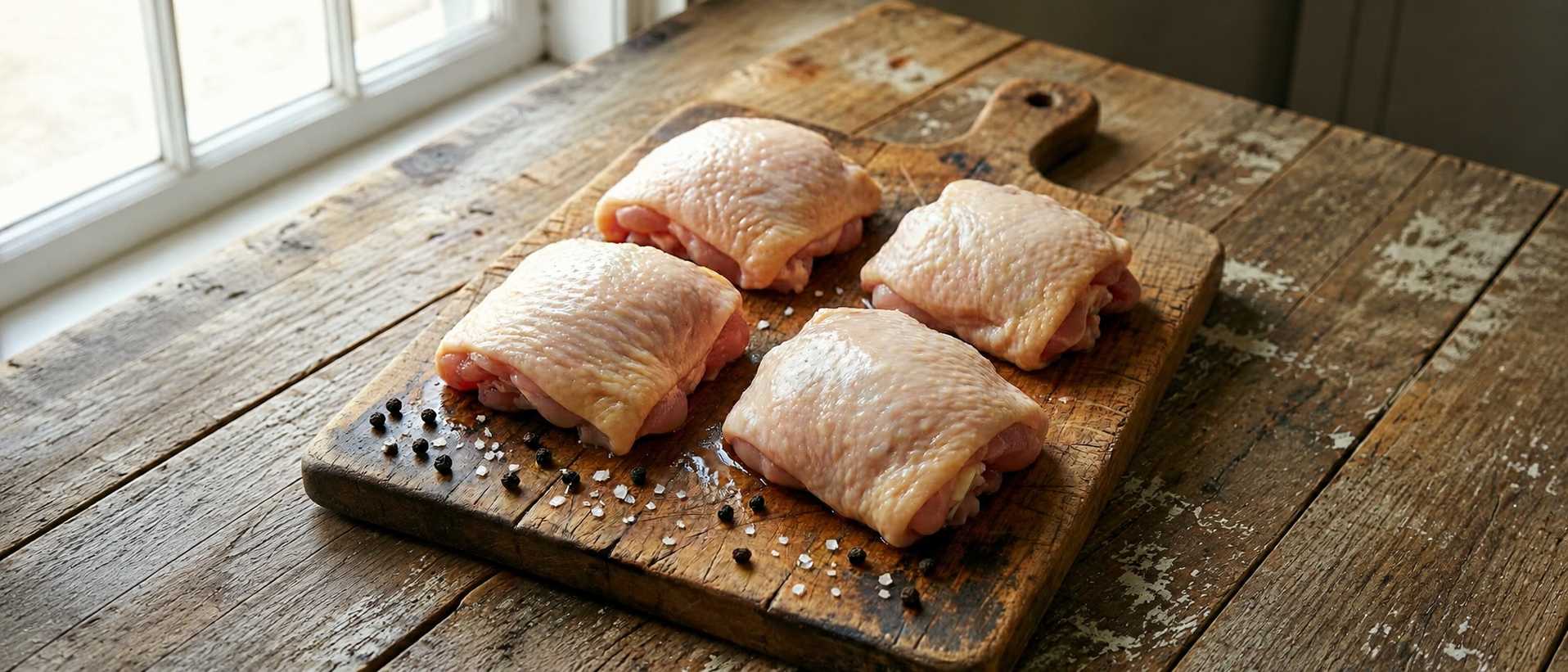
Chicken thighs are one of the most useful cuts of chicken to have in the kitchen.
They have more flavour than breast, cope well with strong seasonings and, thanks
to their natural fat content, remain juicy through cooking methods that can easily
dry out leaner cuts.
They are equally at home on a summer barbecue, slowly braised in a casserole,
roasted until crisp or cooked quickly in a pan for a midweek dinner.
Why chicken thighs?
Flavourful, forgiving and extremely versatile, chicken thighs work particularly
well when you want a cut that can cope with marinades, strong seasoning and
high-temperature cooking without easily becoming dry.
What are chicken thighs?
The thigh comes from the upper part of the chicken leg, between the body and the
drumstick.
Because these muscles do more work than the breast, the meat is darker, slightly
firmer and richer in flavour. It also contains more natural fat, which is one of
the reasons chicken thighs stay particularly succulent when cooked.
That combination of flavour and resilience makes the thigh one of the most
forgiving parts of the bird.
Bone-in or boneless?
Bone-in chicken thighs
Leaving the bone in makes the thigh particularly well suited to roasting,
braising and slower cooking.
The bone helps the joint retain its shape during cooking and works well when
you want deeply flavoured cooking juices for sauces, gravies or casseroles.
Skin-on, bone-in thighs can also develop beautifully crisp skin when roasted.
Boneless chicken thighs
Boneless thighs cook more quickly and are exceptionally versatile.
They are ideal for:
- Barbecuing
- Grilling
- Pan-frying
- Curries
- Kebabs
- Stir-fries
- Traybakes
- Stuffing and rolling
They can be cooked whole or sliced into strips or chunks.
Why thighs have more flavour than chicken breast
Chicken breast is very lean and has a comparatively delicate flavour.
Thigh meat contains more intramuscular fat and connective tissue. During cooking,
these contribute richness and give the meat its characteristic juicy texture.
That means thighs can stand up to much stronger flavours.
Garlic, chilli, mustard, vinegar, citrus, herbs and spices can all be used generously
without overwhelming the chicken.
It is one of the reasons chicken thighs appear in cuisines all over the world.
How to cook chicken thighs
There is no single best way to cook a chicken thigh. The cut adapts extremely
well to different techniques.
On the barbecue
Boneless thighs are particularly good over charcoal.
Season simply or marinate before cooking, then place them over a hot grill until
nicely coloured on both sides and thoroughly cooked.
Unlike very lean meat, thighs tolerate the fierce heat of the barbecue well.
Six flavours to try
- Lemon, garlic and oregano
- Chimichurri
- Harissa and yoghurt
- Honey and mustard
- Smoked paprika and cider vinegar
- Soy, ginger and sesame
If using a sugary glaze, add it towards the end of cooking so that it caramelises
rather than burns.
Pan-frying
A heavy frying pan or cast-iron skillet works particularly well.
Cook boneless thighs over a medium-high heat until deeply coloured, then reduce
the heat slightly to finish cooking.
The browned juices left in the pan can be turned into a quick sauce with wine,
stock, mustard, lemon juice or cream.
Roasting
Chicken thighs are excellent for one-pan dinners.
Arrange them in a roasting dish with vegetables, potatoes, garlic and herbs and
allow the chicken juices to flavour everything underneath.
Skin-on thighs benefit from beginning the cooking skin-side up so that the surface
can become crisp.
Mediterranean vegetables, tomatoes, onions and peppers are particularly good
partners.
Braising
Thigh meat responds extremely well to slower, moist cooking.
Brown the chicken first, then gently cook it in stock, wine, tomatoes, coconut milk
or another sauce.
The result is tender meat and a rich cooking liquor.
That makes thighs particularly suitable for:
- Chicken casserole
- Coq au vin
- Tagines
- Curries
- Paprikash
- Cacciatore-style dishes
Curries
Chicken thigh is often a better choice than breast for a curry.
It has enough flavour to hold its own against spices and sauces and is far less
likely to become dry during the longer cooking required to develop a good curry.
It works particularly well in Indian, Thai, Malaysian and Caribbean-style dishes.
Simple barbecue idea: Lemon, Garlic & Oregano Chicken
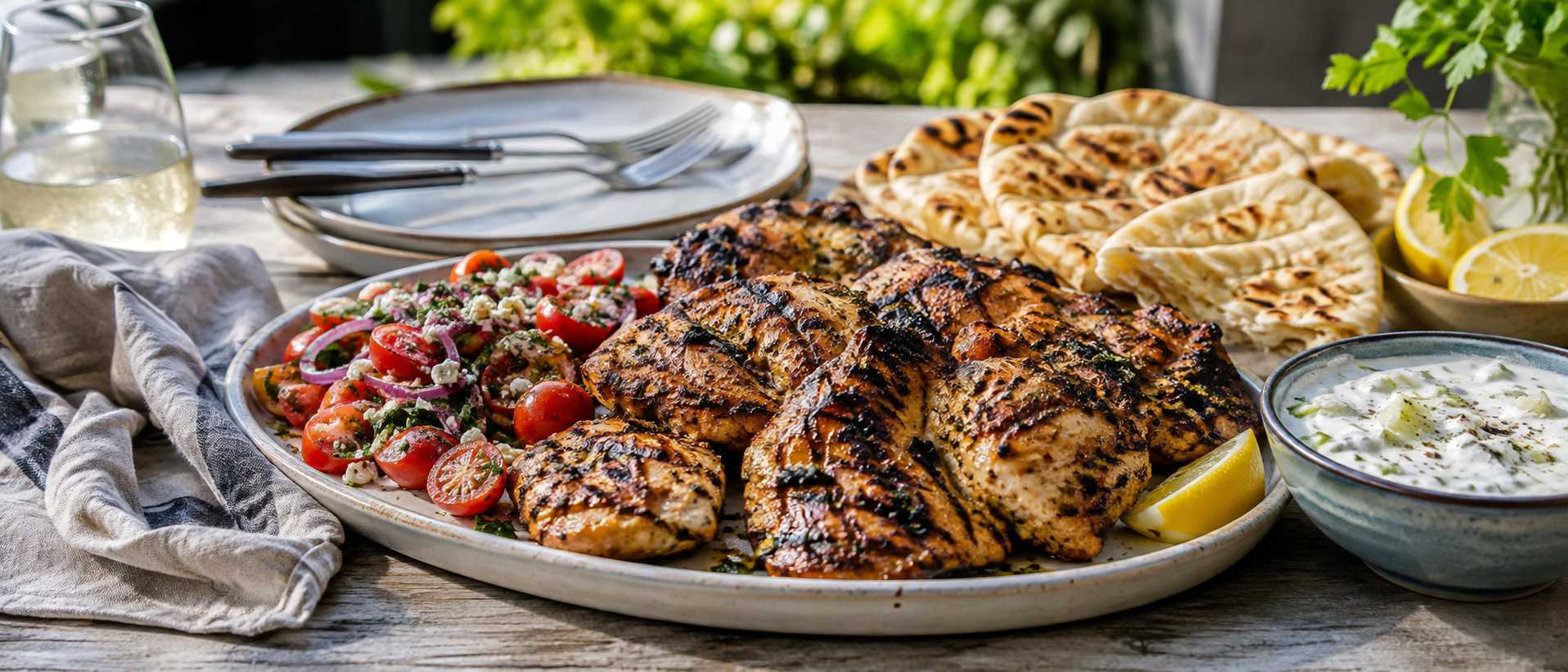
For a very simple summer meal, marinate boneless thighs in olive oil, lemon,
garlic and oregano.
Allow the chicken to take on the flavours before cooking it over a properly
heated barbecue.
Serve with flatbreads, yoghurt, tomato salad and plenty of herbs.
Thigh meat is particularly suited to this kind of informal cooking because there
is much less risk of the chicken becoming dry if it spends another minute over
the coals.
How to build a marinade
Chicken thighs take marinades particularly well.
A useful marinade normally contains some combination of four things:
Fat
Olive oil, yoghurt or another oil.
Acidity
Lemon, lime, vinegar or yoghurt.
Seasoning
Salt, soy sauce, mustard or miso.
Aromatics
Garlic, ginger, herbs, chilli or spices.
A simple starting point is olive oil, lemon, garlic, oregano, salt and black pepper.
From there, you can take the flavour in almost any direction.
Flavours that work particularly well with chicken thigh
Mediterranean
Lemon · Garlic · Oregano · Rosemary · Thyme · Olive oil · Tomatoes · Olives · Feta
Middle Eastern
Cumin · Coriander · Sumac · Harissa · Tahini · Yoghurt · Preserved lemon
South Asian
Ginger · Garlic · Cumin · Coriander seed · Turmeric · Garam masala · Chilli · Yoghurt
East & South-East Asian
Soy sauce · Ginger · Garlic · Sesame · Miso · Chilli · Lemongrass · Lime · Fish sauce
British & European
Mustard · Tarragon · Mushrooms · Cider · Cream · Bacon · Leeks · White wine
What to serve with chicken thighs
Tomato and herb salad
Ripe tomatoes, red onion, herbs and a sharp vinaigrette are excellent alongside
grilled chicken.
Flatbreads and yoghurt
Especially good with lemon, garlic, oregano or Middle Eastern marinades.
Roast potatoes
Let them cook underneath roasting chicken so they absorb some of the juices.
Green salad with mustard dressing
The acidity cuts nicely through the richness of the thigh meat.
Rice or pilaf
Ideal with curries, spiced chicken or braised dishes.
Grilled vegetables
Peppers, courgettes, aubergines and onions all work particularly well on the barbecue.
Thighs for batch cooking
Chicken thighs are very useful when cooking ahead.
They can be roasted or grilled in larger batches and then used in:
- Salads
- Sandwiches
- Wraps
- Flatbreads
- Rice bowls
- Pasta
- Curries
- Soups
Cooked thigh meat also reheats more forgivingly than chicken breast because of
its higher fat content.
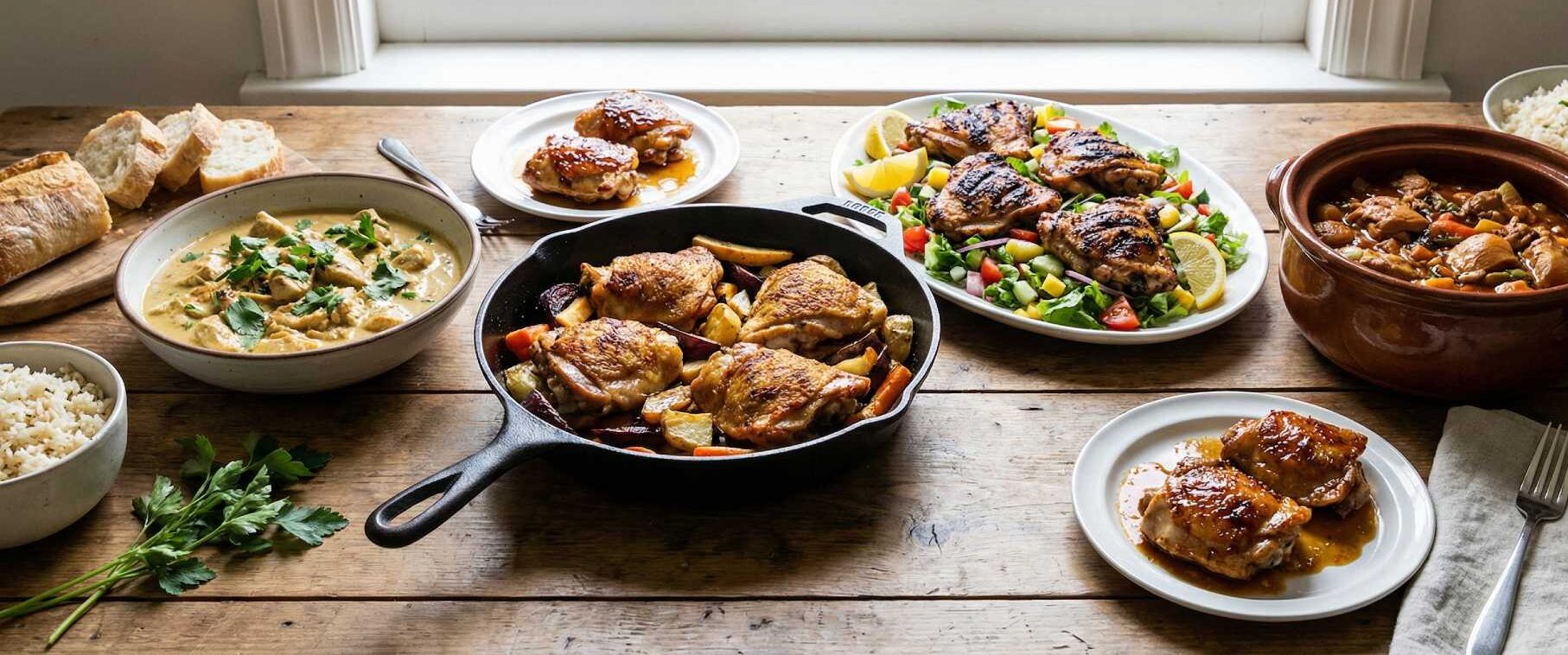
From The Grid Iron Gourmet
Looking for more ways to cook chicken thighs?
Explore our chicken thigh recipe collection for more ideas, from quick midweek dishes
and summer barbecues to slow-cooked curries, traybakes and comforting one-pot meals.
It’s a collection built around one of the most useful cuts of chicken to have in the kitchen.
A cut worth keeping in the freezer
For sheer versatility, chicken thighs are difficult to beat.
A pack in the freezer can become a barbecue dinner, curry, casserole, traybake
or quick pan-fried meal with very little planning.
And because the flavour is relatively robust, you don’t need complicated recipes.
Good chicken, a hot pan or barbecue, some seasoning and a handful of well-chosen
ingredients are often enough.
The Grid Iron approach
For us, chicken thighs are exactly the sort of ingredient that deserves more attention.
They aren’t complicated or particularly showy. They’re simply a flavourful,
versatile cut that rewards good cooking.
Whether they’re marinated with lemon and oregano and cooked over charcoal,
simmered slowly in a curry or roasted with potatoes and garlic, chicken thighs
demonstrate something we believe strongly at Grid Iron:
Some of the best things to cook aren’t necessarily the most expensive cuts —
they’re the ones that deliver the most flavour.